Best Copy Trading Tool
Best Copy Trading Tool for 2026: Two Categories, and How to Pick the Right One
"Copy trading tool" gets used to describe two genuinely different things, and mixing them up is the fastest way to pick the wrong product. Here's the distinction, honestly laid out, so you can figure out which category actually fits what you're trying to do — before comparing specific tools within it.
The Two Categories, Explained
1. Social / broker-based copy trading. Platforms like eToro's CopyTrader or ZuluTrade let you follow and automatically mirror another trader's portfolio, usually within a single broker's ecosystem. You're choosing a person or strategy to follow, and the broker handles the replication. This is aimed at traders who want to piggyback on someone else's decisions rather than run their own strategy across their own accounts.
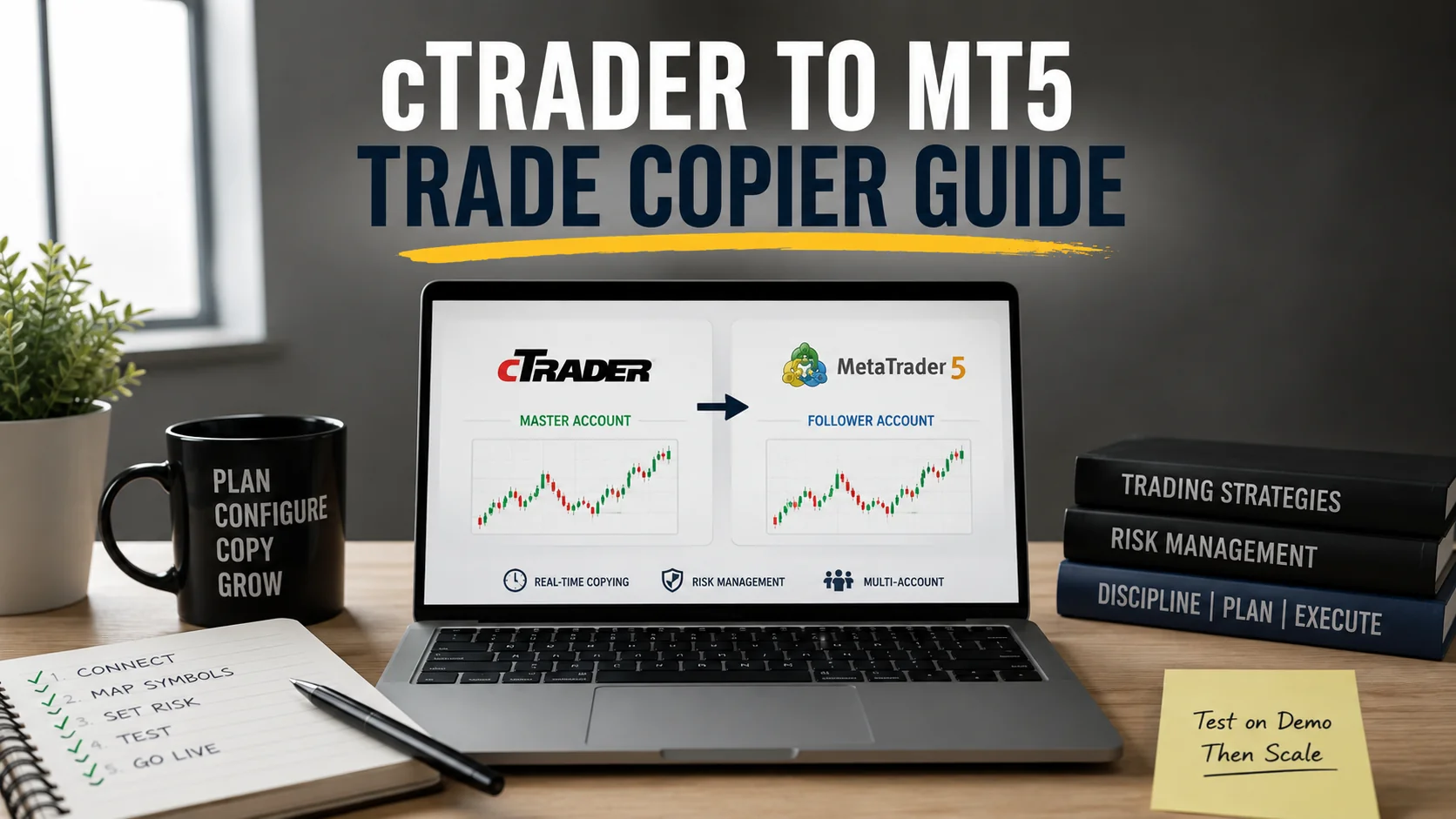
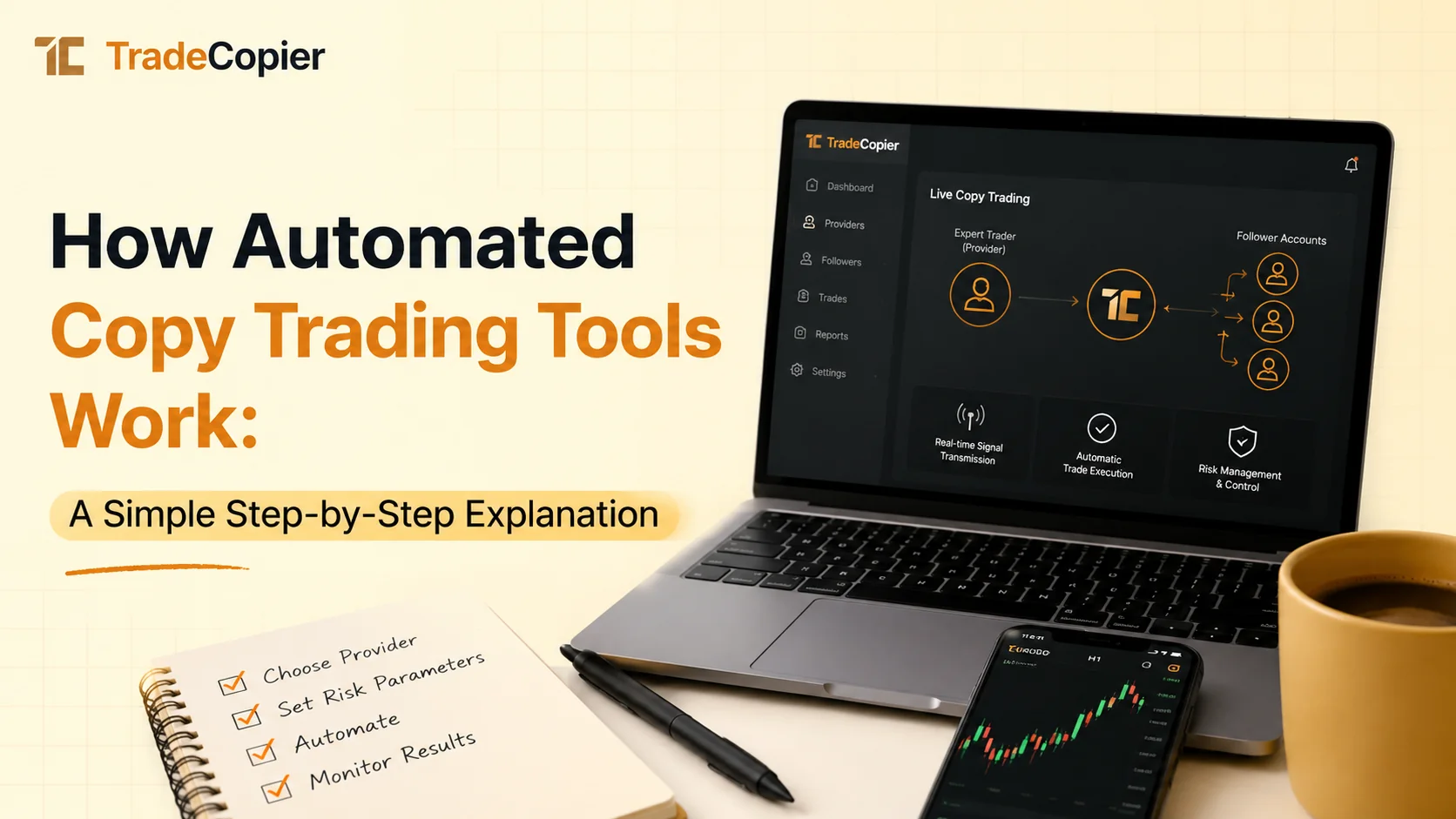
2. Standalone trade copier software. Tools like TradeCopier, Duplikium, MetaCopier, and Tradecopia connect to your own master account (yours, or one you manage) and replicate its trades to your own follower accounts — often across different brokers or platforms (MT4, MT5, cTrader, NinjaTrader). This is aimed at traders and prop firm participants scaling their own strategy across multiple accounts, not following someone else's.
If you're looking to copy a stranger's trading performance, you want category 1. If you're trying to run your own strategy across several accounts you control — including funded prop firm accounts — you want category 2.
Comparing Options Within Each Category
| Tool | Category | Best Fit For |
|---|---|---|
| eToro CopyTrader | Social/broker-based | Following other traders' portfolios within eToro |
| ZuluTrade | Social/broker-based | Signal-following across multiple connected brokers |
| TradeCopier | Standalone, cloud-based | Scaling your own strategy across MT4/MT5/cTrader/NinjaTrader accounts, prop firm friendly |
| Duplikium | Standalone, cloud-based | Similar use case to TradeCopier, Switzerland-based, ultra-low latency claims |
| Tradecopia | Standalone, locally installed | Futures-focused (Tradovate, NinjaTrader, Rithmic), lower latency via local execution |
| MetaCopier | Standalone, cloud-based | Broader platform support including crypto exchanges |
This is a starting map, not an exhaustive list — pricing, latency, and platform support all vary and change, so verify current details directly with each provider before deciding.
What to Actually Compare Once You've Picked a Category
If you've landed on standalone trade copier software (category 2), the factors that matter most are:
- Platform coverage — does it support your specific broker's platform (MT4, MT5, cTrader, NinjaTrader, DXTrade)?
- Cloud vs. local execution — cloud means no VPS to manage but slightly higher latency; local/VPS means lower latency but more setup. See our full breakdown of cloud copy trading for the honest trade-off.
- Risk controls — equity protection, drawdown limits, and news filters matter more than raw speed for most non-scalping strategies.
- Prop firm compatibility — confirm the specific firms and rules supported if that's your use case, and always verify compliance with your firm's actual current terms.
- Pricing transparency — check for hidden VPS costs bundled into "cheaper" competitors, since cloud copiers often eliminate that line item entirely.
For a deeper, criteria-by-criteria buying guide specifically for standalone cloud copiers, see Best Cloud Trade Copier in 2026: How to Actually Choose One.
Where TradeCopier Fits
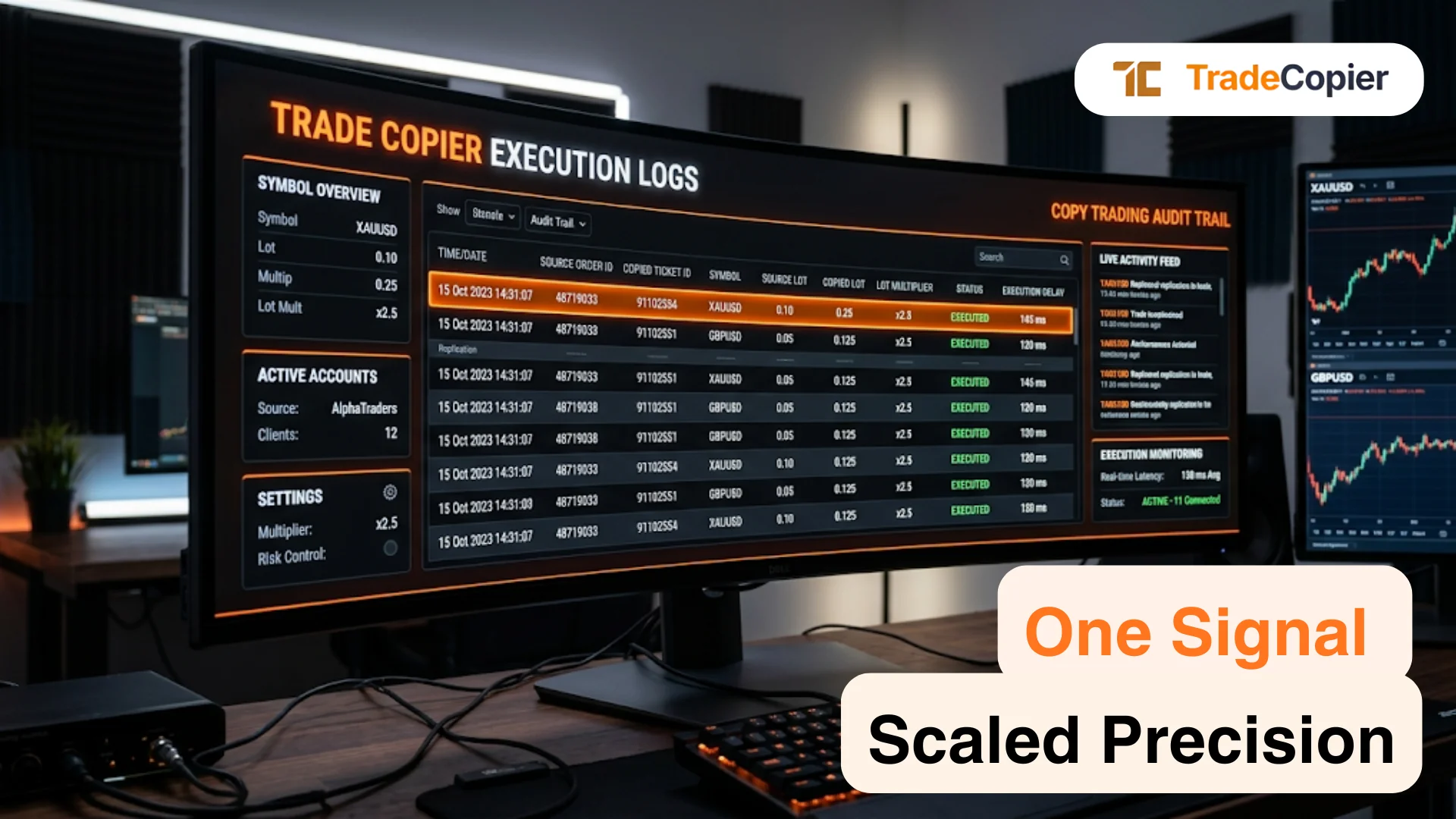
TradeCopier is a standalone, cloud-based trade copier — not a social/broker-based copy trading platform. It's built for traders and prop firm participants who want to run their own strategy across MT4, MT5, cTrader, NinjaTrader, and DXTrade accounts, with equity protection, symbol mapping, and activity logs included even on the free tier. If you're actually looking for social/broker-based copy trading — following another trader's portfolio rather than running your own — TradeCopier isn't the right category of tool, and that's worth knowing upfront rather than discovering after signing up.
FAQ
What's the difference between copy trading and a trade copier? "Copy trading" often refers to socially following another trader's portfolio through a broker (like eToro). A "trade copier" is standalone software that replicates trades between accounts you control, often across different brokers or platforms.
Is TradeCopier the same category as eToro's CopyTrader? No. TradeCopier is a standalone trade copier for replicating your own strategy across your own accounts, not a social platform for following other traders' portfolios.
Which is better for prop firm accounts — social copy trading or a standalone trade copier? Standalone trade copiers are the relevant category for prop firm accounts, since you're typically scaling your own evaluated strategy across funded accounts rather than following someone else's trades.
What should I compare once I know which category I need? Platform coverage, cloud vs. local execution trade-offs, risk controls, prop firm compatibility, and pricing transparency — see the linked buying guide above for a full breakdown.