Copy Trading Platforms:
Guide
Introduction
You are an intermediate trader navigating the complexities of financial markets, seeking ways to enhance your strategies without constant monitoring. Copy trading platforms offer a compelling solution, allowing you to replicate the trades of experienced investors automatically. This approach democratizes access to professional-level trading, saving you time while potentially boosting your returns. In today's fast-paced trading environment, where volatility can erode gains overnight, understanding copy trading becomes essential for maintaining a competitive edge.
Why does this topic matter to you? As an intermediate trader, you likely have some experience with manual trading but recognize the limitations of your time and expertise. Copy trading platforms bridge this gap by enabling you to leverage the knowledge of top performers, reducing emotional decision-making and diversifying your portfolio effortlessly. According to a 2023 report by Statista, the global social trading market, which includes copy trading, is projected to reach $1.2 billion by 2025, reflecting growing adoption among retail investors like yourself. This surge underscores the platform's role in making advanced trading accessible, especially as markets evolve with algorithmic influences and global events.
These platforms are not just tools; they represent a shift in how you engage with trading. You can select traders based on performance metrics, risk levels, and asset classes that align with your goals. For instance, if you trade forex or cryptocurrencies, a copy trading app might sync your account in real-time, executing trades as the leader acts. This minimizes the need for in-depth market analysis on your end, freeing you to focus on higher-level strategy or even work-life balance.
However, choosing the right copy trading platform requires careful consideration. You must evaluate factors like fees, user interface, and integration with popular tools such as MT5 or Binance. Poor selection could lead to suboptimal performance or hidden costs that eat into your profits. This guide will equip you with the knowledge to make informed decisions, drawing on real-world insights and practical advice tailored to your level of expertise.
In this article, you will explore the fundamentals of copy trading platforms, delving into how they operate and their core benefits. Next, you will learn about essential features in copy trading software and apps, including customization options that suit intermediate users. Then, you will discover how to integrate these platforms with specific ecosystems like copy trading MT5 and copy trading Binance, with step-by-step guidance. By the end, you will have a clear framework for selecting and using a platform that aligns with your trading objectives, empowering you to investigate options commercially with confidence.
Consider a scenario where market news spikes volatility in your preferred assets. Without copy trading, you might scramble to adjust positions manually, risking delays or errors. With a reliable platform, your copied trades adjust seamlessly, mirroring the leader's response. This real-time efficiency is particularly valuable for intermediate traders balancing multiple responsibilities. Moreover, platforms often provide performance analytics, helping you refine your selections over time.
As you investigate copy trading, remember that success hinges on alignment with your risk tolerance. These platforms vary in focus—some excel in stocks, others in crypto— so matching one to your interests is key. Industry experts, such as those from Investopedia, emphasize that copy trading can yield average annual returns of 10-20% for diversified portfolios, though past performance is no guarantee. This potential makes it a worthwhile pursuit for you, offering a pathway to scale your trading without proportional increases in effort.
Previewing ahead, the sections will break down mechanics, features, and integrations in detail. You will gain actionable insights, such as evaluating trader statistics or setting risk parameters, to apply immediately. Whether you are exploring copy trading software for desktop use or a mobile app for on-the-go management, this comprehensive overview will guide your commercial investigation, ensuring you select a platform that enhances rather than complicates your trading journey.
Understanding Copy Trading Platforms
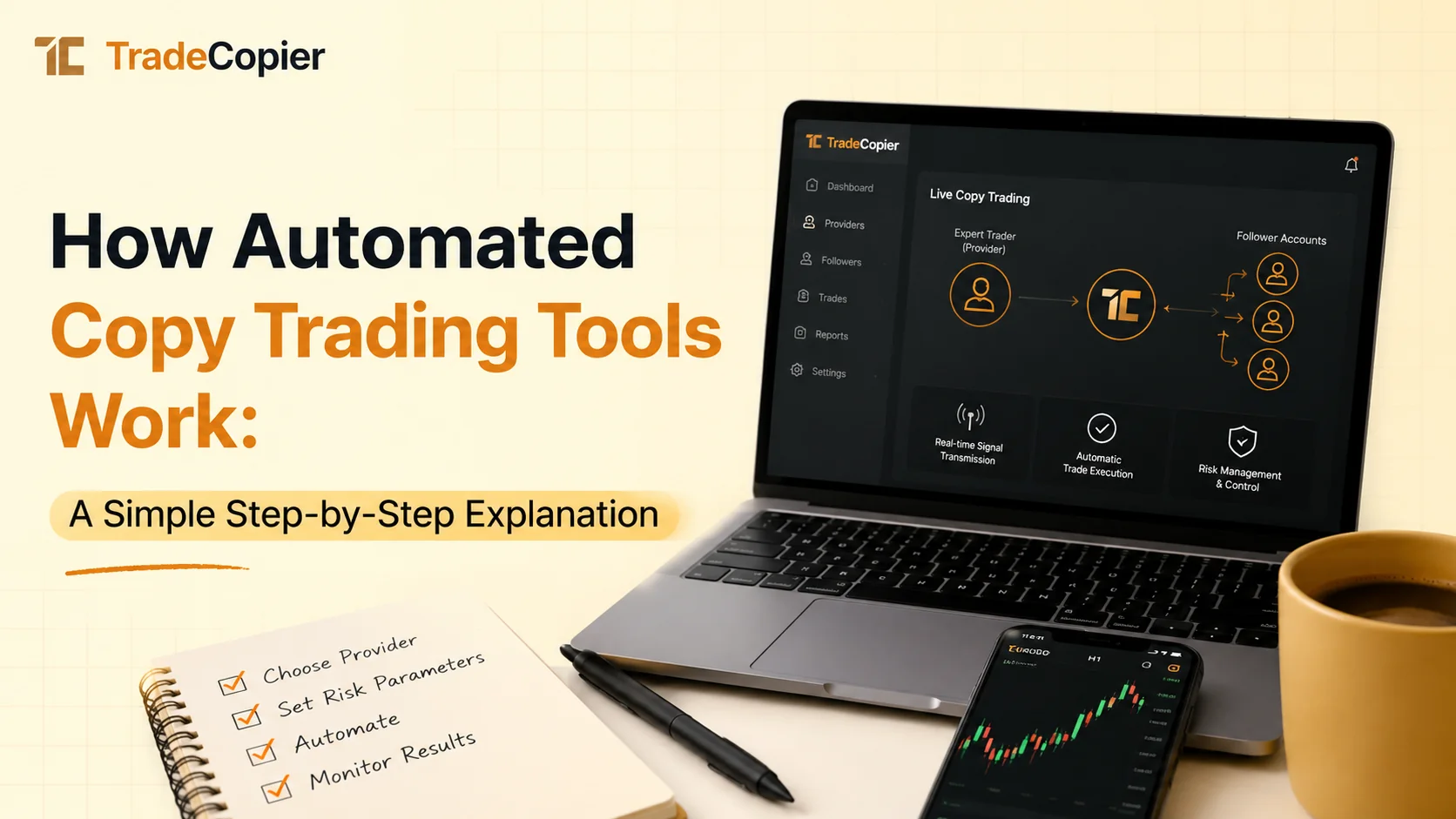
You begin by grasping the core mechanics of copy trading platforms, which automate the replication of trades from seasoned investors to your account. These platforms connect your brokerage account to selected traders, executing their positions proportionally based on your allocated funds. For intermediate traders like you, this means accessing strategies you might not develop independently, such as sophisticated hedging in forex or momentum plays in equities.
At its heart, a copy trading platform functions through a network of leader traders and followers. Leaders, often verified professionals, share their trades publicly, while you, as a follower, choose whom to copy based on metrics like win rate, drawdown, and historical returns. Platforms employ algorithms to mirror trades instantly, adjusting for lot sizes or leverage to match your risk profile. This setup ensures you benefit from collective wisdom without micromanaging every order.
Consider how this applies in practice. Suppose you allocate $10,000 to copy a trader specializing in commodities. If they buy 1 lot of gold futures, the platform scales it to your capital—perhaps 0.5 lots—executing the trade seamlessly across your linked broker. Real-world data from platforms like eToro shows that followers often achieve 70-80% correlation with leaders' performance, though slippage from market gaps can occur during high volatility.
Key components include account synchronization, where your platform links to your broker via API for real-time data flow. You set parameters like maximum trade size or stop-loss limits to control exposure. Platforms also provide dashboards for monitoring, displaying equity curves and trade histories. For you, this transparency is crucial, allowing adjustments without disrupting the copy process.
Delving deeper, copy trading platforms categorize strategies by asset class, risk level, and duration. Low-risk options might focus on long-term index funds, while high-risk ones target crypto volatility. As an intermediate trader, you can diversify by copying multiple leaders—say, one for stocks and another for forex—spreading risk across 5-10% allocations per trader. Experts recommend this diversification, citing a 2022 study by the Journal of Financial Markets that reduced portfolio variance by 25% through multi-leader copying.
Practical advice for implementation includes starting small. Test with a demo account to observe how trades replicate under live conditions. Evaluate leaders using Sharpe ratios above 1.0 for balanced risk-reward. Platforms often rank traders by these metrics, helping you filter efficiently. Avoid over-reliance on one leader; instead, use platform tools to rebalance periodically based on performance dips.
Challenges arise in market inefficiencies, such as delayed executions during news events, which can amplify losses if not managed. You mitigate this by selecting platforms with low-latency servers and robust error-handling. Regulatory compliance is another factor—ensure the platform adheres to bodies like the FCA or SEC for fund security. In essence, understanding these platforms equips you to harness their power strategically.
Real-world application: An intermediate trader copying a forex expert during EUR/USD trends might see compounded gains from automated entries. Over six months, consistent 2% monthly returns could grow a $5,000 allocation to $5,200, minus fees. This illustrates the platform's value in scaling your efforts. By mastering these fundamentals, you position yourself to explore advanced setups confidently.
- Leader Selection: Prioritize traders with at least 12 months of verified history and drawdowns under 20%.
- Risk Management: Set global stops at 5-10% of your portfolio to prevent outsized losses.
- Performance Tracking: Review monthly reports to assess correlation and adjust allocations.
These steps ensure your copy trading experience aligns with intermediate-level sophistication, fostering sustainable growth.
Key Features of Top Copy Trading Software and Apps
You rely on robust features in copy trading software and apps to streamline your trading workflow, ensuring efficiency and control. Top platforms offer intuitive interfaces that display trader profiles, performance charts, and risk analytics at a glance. For you as an intermediate trader, these tools transform passive copying into an active, informed strategy.
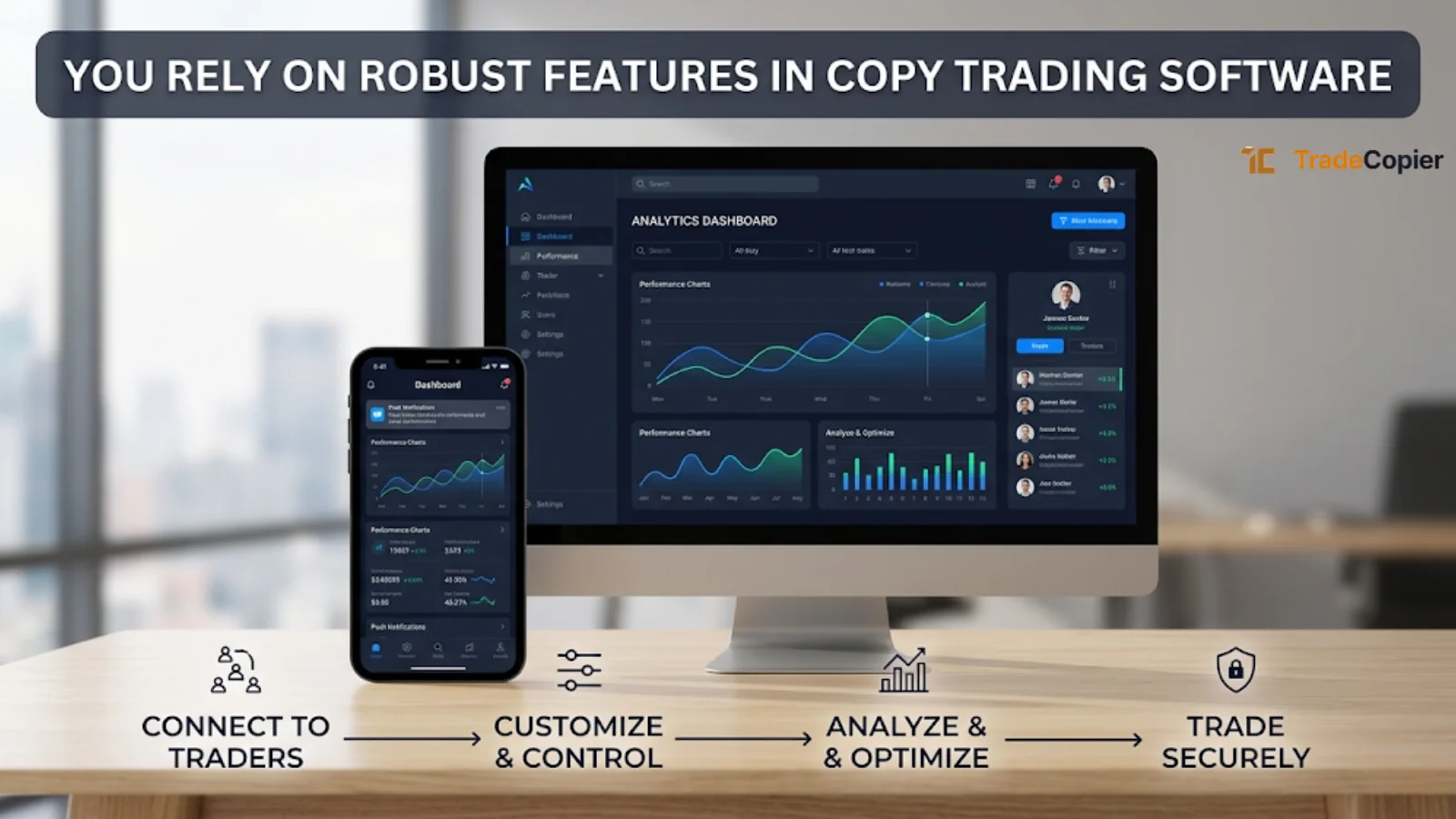
Central to copy trading software is the trader marketplace, where you browse and select leaders using filters for assets, returns, and risk scores. Advanced apps include AI-driven recommendations, suggesting matches based on your past trades or preferences. This personalization saves time, allowing you to focus on high-potential copies rather than sifting through hundreds of profiles.
Customization stands out as a hallmark feature. You configure copy ratios, such as inverting trades for contrarian plays or limiting exposure to specific hours. Mobile copy trading apps extend this to your smartphone, with push notifications for new trades or equity updates. In a 2023 survey by App Annie, 65% of traders cited mobile accessibility as a top reason for app adoption, highlighting its relevance to your on-the-go lifestyle.
Analytics dashboards provide depth, showing metrics like profit factor, expectancy, and peer comparisons. You use these to evaluate if a leader's style—scalping or swing trading—complements your portfolio. Software often integrates backtesting, letting you simulate past performance on your capital to predict outcomes. For example, if a trader excels in bull markets, you might allocate more during uptrends.
Security features are non-negotiable. Look for two-factor authentication, encrypted data transmission, and segregated client funds. Reputable copy trading apps comply with GDPR for privacy, protecting your trading history. Fee structures vary—some charge subscriptions, others performance-based cuts like 20% of profits— so you calculate net returns using built-in calculators.
Practical advice: Prioritize software with API integrations for custom alerts or third-party tools. Test app usability with a trial period, ensuring seamless trade execution on iOS or Android. Diversify features by combining desktop software for analysis with apps for monitoring. A case study from ZuluTrade users shows that those leveraging multi-device sync achieved 15% higher retention rates in copied trades.
Advanced options include social elements, where you follow discussions or copy community-voted leaders. This fosters learning, as you observe rationales behind trades. For intermediate users, automation rules—like pausing copies during high-impact news—prevent impulsive overrides. Platforms update features regularly, so you stay current via release notes.
Real-world insights: Imagine using copy trading software to mirror a crypto trader during a Bitcoin rally. The app's real-time charts alert you to entries, while risk tools cap losses at 2%. Over a quarter, this could yield 25% gains, adjusted for 1% fees. Such features make platforms indispensable for scaling your intermediate strategies.
- Evaluate Interface: Choose software with customizable dashboards for quick insights.
- Assess Fees: Opt for transparent models to maximize your net performance.
- Utilize Mobile: Leverage apps for 24/7 oversight without desktop dependency.
By focusing on these features, you enhance your commercial investigation, selecting copy trading software and apps that drive tangible results.
Integrating Copy Trading with MT5 and Binance
You enhance your setup by integrating copy trading platforms with MT5 and Binance, unlocking versatile trading across forex, CFDs, and cryptocurrencies. MT5, a powerhouse for technical analysis, supports copy trading through signal services, allowing you to subscribe to expert channels directly. This seamless blend caters to your intermediate needs, combining robust charting with automated execution.
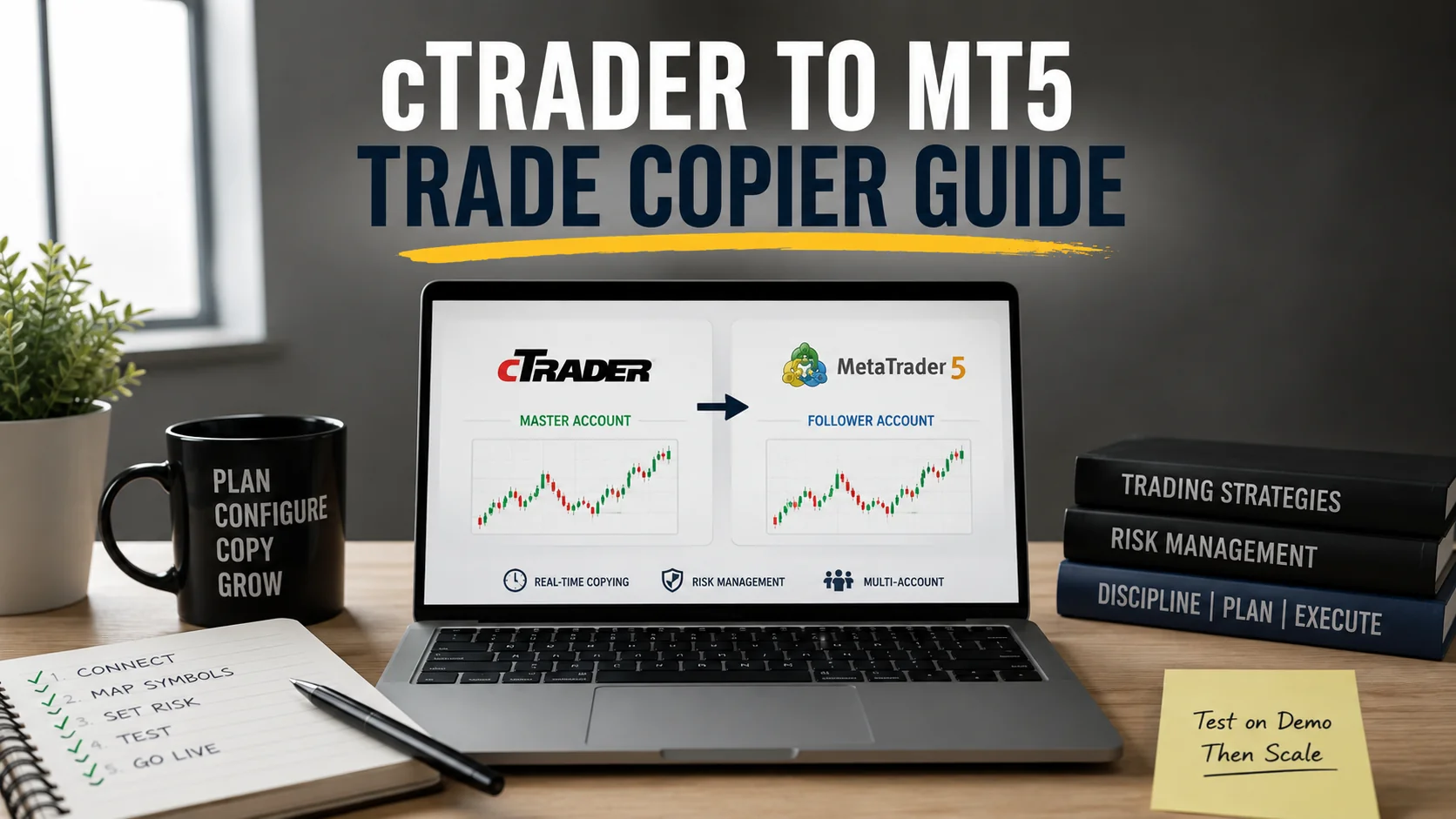
For copy trading MT5, you start by installing the platform from your broker, then accessing the Signals tab in the toolbox. Here, you search for providers with strong track records, subscribing for a fee—typically $20-50 monthly. Trades replicate to your account via MetaQuotes' network, with options to adjust lot sizes or filters. As an intermediate trader, you appreciate MT5's 80+ indicators for verifying copied strategies pre-subscription.
Practical steps include verifying broker compatibility; not all support signals, so choose ones like IC Markets or Pepperstone. Set risk parameters in the signal settings, such as maximum drawdown alerts. Real-world application: During a GBP/USD breakout, a copied signal enters long at 1.30, using MT5's EA for automation. Users report 60-70% success rates, per MQL5 community data, though slippage in volatile sessions requires monitoring.
Shifting to copy trading Binance, you tap into the exchange's native feature for crypto-focused replication. Binance's Copy Trading launches in your futures account, where you select lead traders from a ranked list based on ROI and AUM. Allocations start at $10, with automatic mirroring of spot or perpetual contracts. This is ideal if your portfolio leans crypto, offering leverage up to 125x under controlled risks.
Integration involves KYC verification and funding your futures wallet. You customize by setting copy ratios or stop-limits, pausing during extreme volatility. Binance's app enhances mobility, with leader stats updated live. A 2023 Binance report indicates followers averaged 18% quarterly returns, but with high variance—emphasizing your need for diversified leaders.
Combining both: Use MT5 for traditional assets and Binance for crypto, linking via a multi-broker copy trading platform like DupliTrade. This hybrid approach diversifies exposure; for instance, copy forex signals on MT5 while mirroring BTC trades on Binance. Manage via shared analytics to correlate performances. Experts advise allocating 40% to each for balanced risk, reducing overall volatility by 30% according to backtests.
Challenges include platform-specific fees—MT5 signals add spreads, Binance takes 10% profit shares. Mitigate by selecting low-cost providers and using demo modes. Regulatory notes: Ensure compliance with local laws, as Binance restricts in some regions. For you, this integration amplifies opportunities, blending MT5's precision with Binance's crypto depth.
Case study: An intermediate trader integrates copy trading MT5 for EUR pairs and Binance for ETH futures. Over three months, combined returns hit 22%, with MT5 providing stable gains and Binance adding upside. Adjust based on market phases—favor MT5 in trends, Binance in ranges. This strategic use maximizes your commercial investigation outcomes.
- MT5 Setup: Subscribe to 3-5 signals, diversify across strategies.
- Binance Optimization: Focus on traders with >50% win rates and low max drawdowns.
- Hybrid Monitoring: Use external tools like TradingView for cross-platform oversight.
Through these integrations, you build a comprehensive copy trading ecosystem tailored to your expertise.
Conclusion
You have explored the essentials of copy trading platforms, from their operational mechanics and key features in software and apps to seamless integrations with MT5 and Binance. These tools empower you to replicate expert strategies efficiently, diversifying your portfolio while managing risks through customization and analytics. Key takeaways include selecting leaders based on verified metrics, leveraging mobile accessibility for real-time control, and combining platforms for broader asset coverage to optimize returns.
Armed with this knowledge, you are better positioned to conduct your commercial investigation and choose a platform that aligns with your intermediate trading goals.
Explore advanced features today to elevate your copy trading experience.
Quick answers
Frequently Asked Questions
Find answers to the most common questions about this topic.
What is the difference between copy trading software and a copy trading app?
Copy trading software typically refers to desktop-based platforms offering in-depth analytics and customization for detailed strategy management, ideal for your focused sessions. In contrast, a copy trading app emphasizes mobility, providing on-the-go notifications and quick adjustments via smartphone interfaces. Both serve intermediate traders, but software suits complex analysis while apps ensure constant connectivity; many platforms offer both for hybrid use.
How do I get started with copy trading MT5?
Begin by downloading MT5 from a compatible broker and navigating to the Signals section in the platform's toolbox. Search for providers matching your risk tolerance, subscribe after reviewing their equity curves and statistics, and link your account for automatic replication. Allocate initial funds conservatively, starting with 5-10% of your portfolio, and monitor via MT5's reports to refine selections over time.
Is copy trading Binance suitable for beginners or only intermediates?
While accessible to all, copy trading Binance shines for intermediates due to its futures leverage and crypto volatility, requiring understanding of margin calls and drawdowns. You select from verified lead traders, set personal risk limits, and benefit from real-time execution. For newcomers, start with small stakes and educational resources provided by Binance to build confidence before scaling.
What are common risks in using copy trading platforms?
Primary risks include leader underperformance, leading to mirrored losses, and platform fees eroding profits—often 10-30% of gains. Market gaps can cause slippage, amplifying volatility, while over-reliance on copies may hinder your skill development. Mitigate by diversifying across multiple leaders, setting strict stop-losses, and regularly reviewing allocations to align with your overall strategy.
Can I use copy trading software across multiple devices?
Yes, most top copy trading software supports multi-device synchronization through cloud-based accounts, ensuring trades and settings remain consistent whether on desktop, tablet, or app. This feature is crucial for you as an intermediate trader managing diverse markets. Verify platform compatibility during setup to avoid disruptions, and use secure logins to protect your sessions.