Copy Trading Signal Tools Revealed
Introduction
In the fast-paced world of forex trading, where market volatility can turn opportunities into losses in mere seconds, intermediate traders face an unrelenting pressure to stay ahead. Copy trading signal tools emerge as a critical lifeline, enabling traders to replicate the strategies of seasoned professionals without the exhaustive need for constant market monitoring. These tools, encompassing copy trading signals, copy trading software, trade copier tools, and services from forex signal providers, democratize access to expert-level trading, promising amplified returns amid rising competition.
The urgency of adopting such tools cannot be overstated; with global forex volumes exceeding $7.5 trillion daily according to the Bank for International Settlements, missing out on efficient replication methods equates to forfeiting potential gains. Intermediate traders, armed with basic knowledge but lacking the time or edge of full-time experts, stand to benefit immensely from these innovations. This article delves into the mechanics, advantages, and strategic selection of copy trading signal tools, equipping readers with the insights needed to act decisively in a market that rewards speed and precision.
Why does this matter now? As algorithmic trading dominates and retail traders seek parity with institutional players, ignoring copy trading signal tools risks obsolescence. The following sections will explore the foundational workings of these tools, their tangible benefits coupled with inherent risks, and practical guidance on choosing reliable options. By the end, intermediate traders will grasp how to integrate these resources to elevate their portfolios urgently, before market shifts leave them behind.
From automated signal replication to performance analytics, copy trading software bridges the gap between novice execution and expert intuition. Real-world examples illustrate how traders have leveraged trade copier tools to navigate turbulent pairs like EUR/USD during geopolitical events. This comprehensive overview underscores the imperative for immediate adoption, previewing a pathway to enhanced trading efficacy.
Understanding the Mechanics of Copy Trading Signal Tools
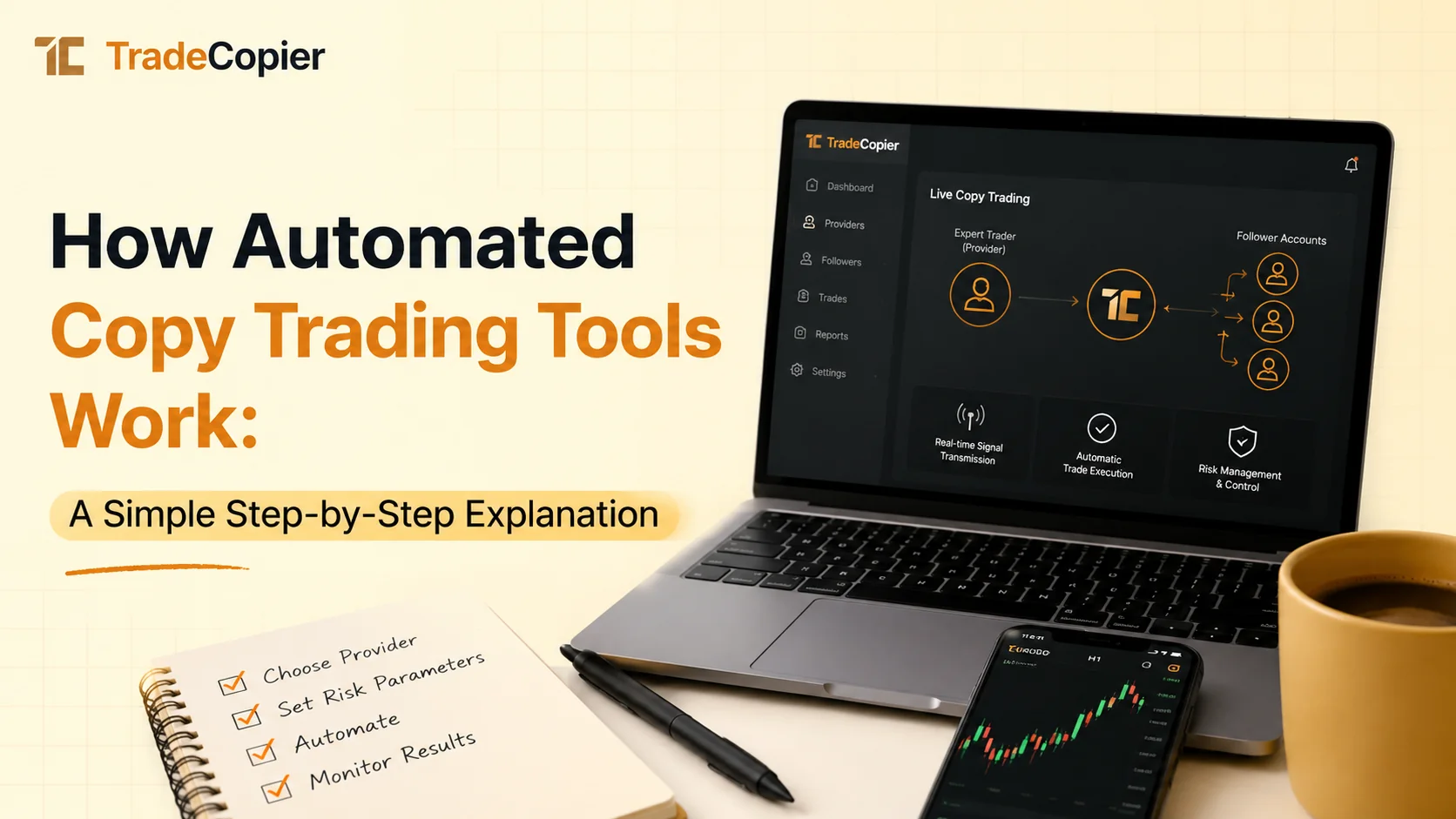
Copy trading signal tools operate on a sophisticated framework that automates the transfer of trade signals from expert providers to followers' accounts, ensuring seamless synchronization in real-time. At their core, these systems integrate with trading platforms like MetaTrader 4 or 5, where copy trading signals are generated by forex signal providers based on technical analysis, fundamental insights, and algorithmic models. Intermediate traders must recognize that this process begins with signal generation—experts analyze market data, identify entry and exit points, and broadcast these via dedicated software—followed by instantaneous copying to the user's account, minimizing latency that could erode profits.
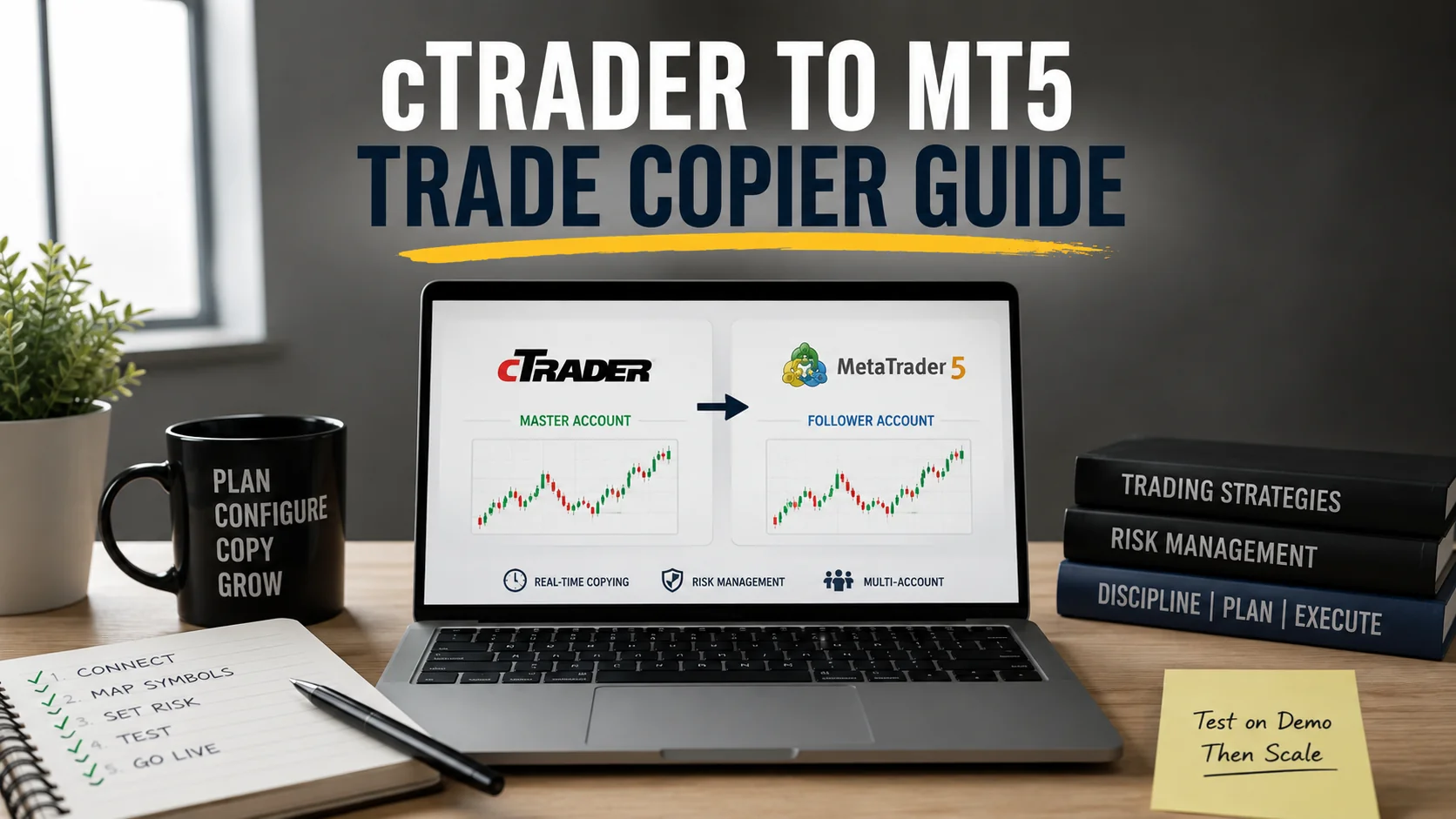
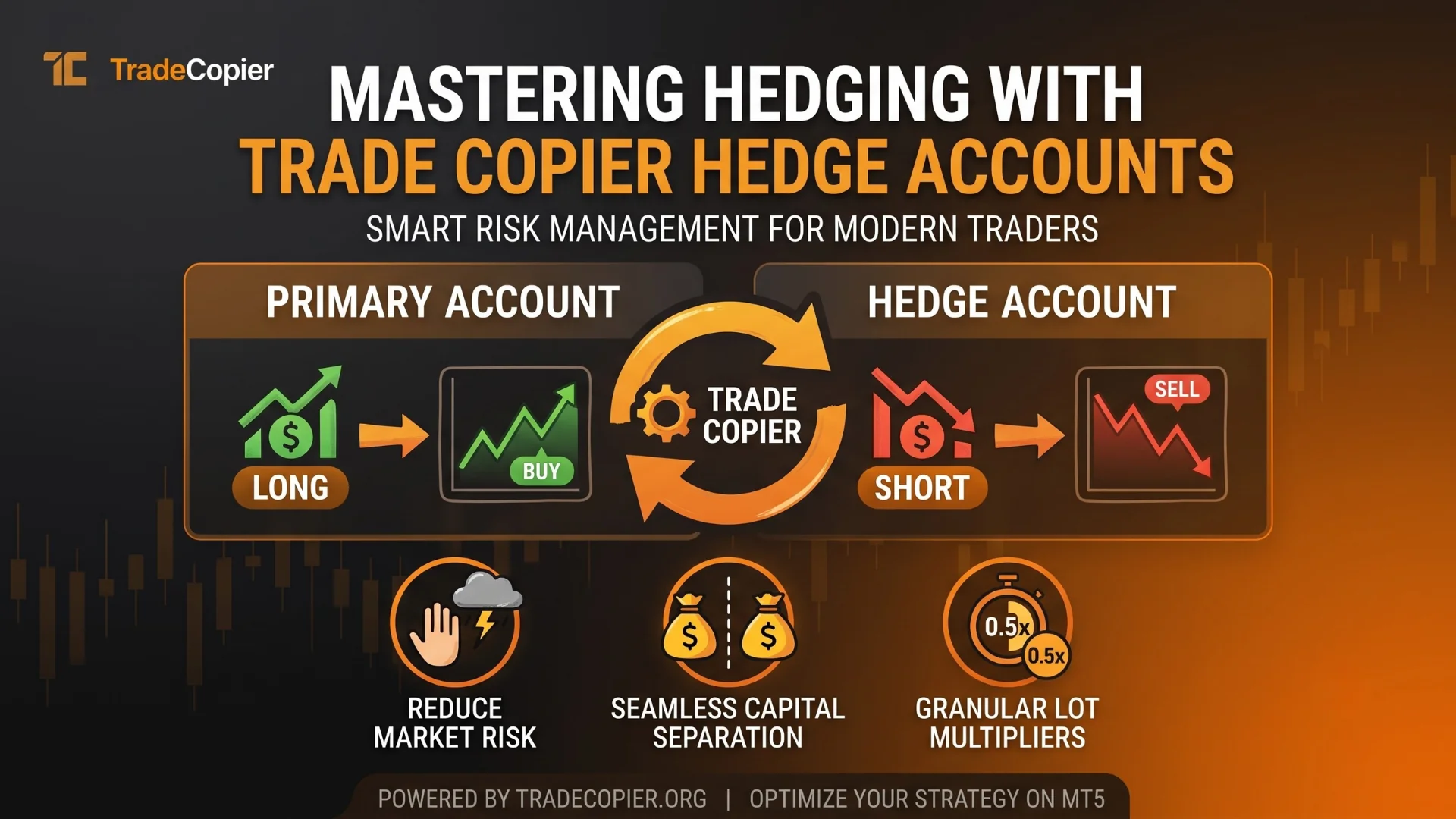
The technical architecture involves several key components: a master account managed by the signal provider, a slave or follower account for the trader, and the intermediary copy trading software that executes trades proportionally based on account size and risk settings. For instance, if a forex signal provider recommends buying 1 lot of GBP/JPY at a specific price, the trade copier tools adjust the volume for the follower's smaller equity, say 0.1 lots, while maintaining the same stop-loss and take-profit levels. This proportionality is crucial, as it prevents overexposure; studies from the Forex Brokers Association indicate that properly calibrated copiers reduce drawdowns by up to 30% in volatile sessions.
Delving deeper, these tools incorporate risk management features such as equity protection stops and slippage controls, which are vital for intermediate traders navigating unpredictable spreads. Consider a scenario during the 2022 inflation spikes, where copy trading signals from a reputable provider captured a 150-pip move in USD/CAD; followers using advanced trade copier tools mirrored this without manual intervention, yielding consistent returns. However, the urgency lies in understanding compatibility—tools must align with brokers' APIs to avoid execution failures, a common pitfall that hype often overlooks in academic evaluations.
Practical advice for implementation includes starting with demo accounts to test signal latency and provider reliability. Bullet points outline essential steps:
- Select a forex signal provider with verifiable track records, such as those audited by Myfxbook.
- Configure copy trading software parameters for maximum drawdown limits, typically 10-20% of equity.
- Monitor synchronization logs to ensure trades execute within 1-2 seconds of signal issuance.
This foundational knowledge empowers traders to harness these tools effectively, transforming passive following into an active, informed strategy amid urgent market demands.
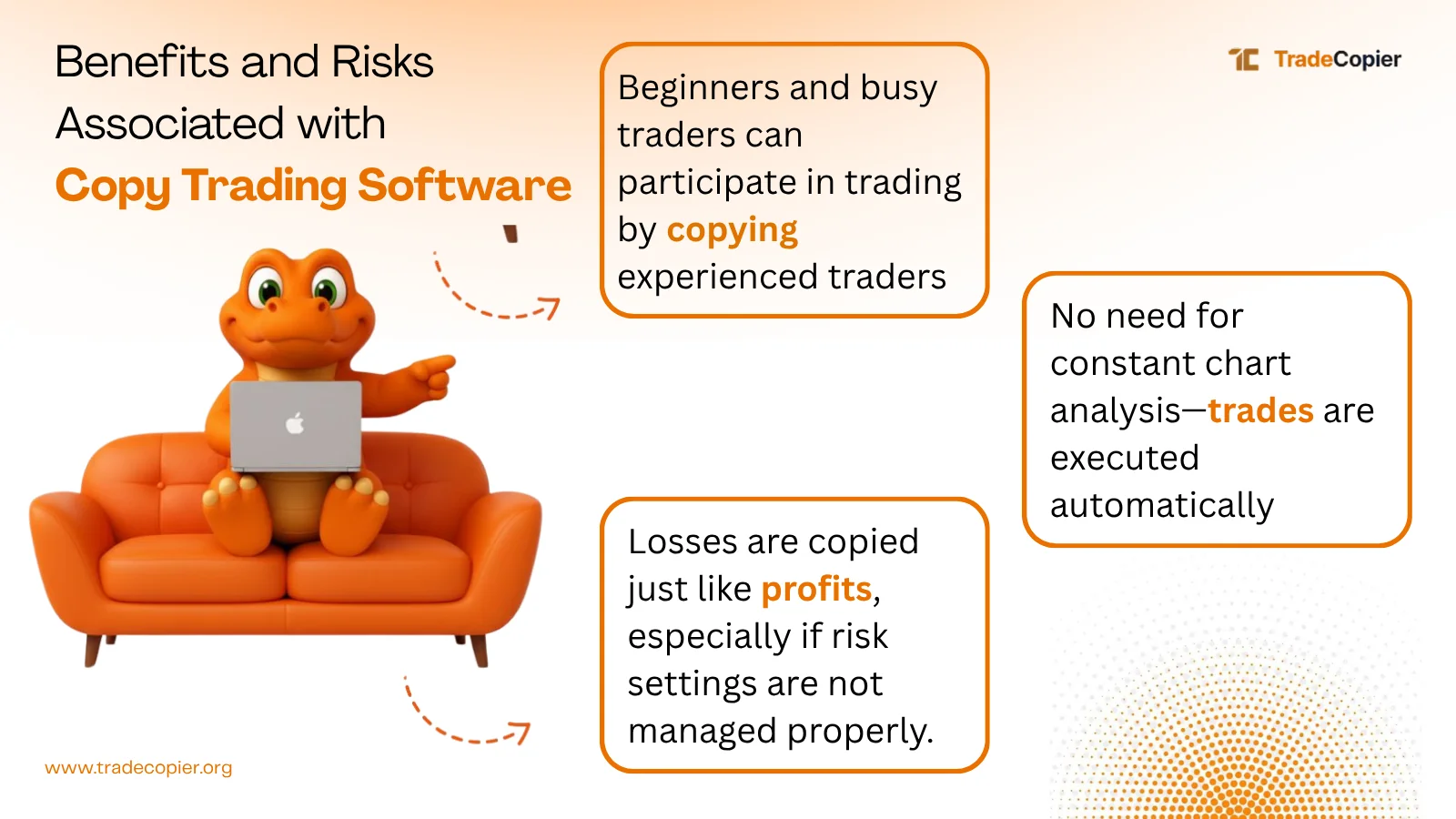
Benefits and Risks Associated with Copy Trading Software
Copy trading software offers intermediate traders a compelling array of benefits, chief among them the ability to diversify portfolios by mirroring multiple experts simultaneously, thereby mitigating the risks of singular strategy dependence. In an era where time is a scarce commodity, these tools allow users to leverage the collective wisdom of top performers, with data from eToro's 2023 report showing that copiers achieved 15-20% higher annualized returns compared to solo traders. The hype surrounding this efficiency is justified academically, as it enables focus on higher-level decisions like capital allocation rather than granular chart analysis.
Another pivotal advantage is the educational value; by observing replicated trades, intermediate traders gain insights into advanced tactics, such as scalping during Asian sessions or hedging amid news releases. For example, a trader copying signals from a forex signal provider specializing in commodity pairs could learn to anticipate oil-driven USD movements, applying this knowledge independently over time. Moreover, trade copier tools often include performance metrics dashboards, providing transparency on win rates—averaging 65-75% for vetted providers—and historical equity curves, fostering data-driven refinements.
Yet, the urgency of hype must be tempered by a rigorous assessment of risks, including over-reliance on providers whose strategies may falter in black swan events. Academic studies, like those in the Journal of Financial Markets, highlight that up to 40% of copy trading accounts experience amplified losses during high-volatility periods due to unadjusted leverage. Slippage and broker fees can erode edges, particularly for smaller accounts, while the psychological risk of "set-it-and-forget-it" complacency undermines skill development.
To navigate these, practical advice emphasizes diversification: follow 3-5 uncorrelated providers to balance exposure. Numbered steps for risk mitigation include:
- Evaluate provider drawdown history, avoiding those exceeding 25% in backtests.
- Set personal overrides in copy trading software to pause copying during major economic announcements.
- Regularly review and rebalance allocations, ensuring no single signal dominates more than 30% of the portfolio.
Real-world application shines in the 2020 COVID crash, where diversified copiers preserved capital better than manual traders. Thus, while benefits propel urgent adoption, a balanced academic lens reveals the need for vigilant risk management to sustain long-term viability.
Selecting the Right Trade Copier Tools and Forex Signal Providers
Choosing optimal trade copier tools and forex signal providers demands a systematic, academic approach to sift through the proliferation of options, ensuring alignment with intermediate traders' goals and risk tolerances. The process starts with verifying provider credentials: seek those with at least two years of audited performance, transparent subscription models, and integration with popular platforms. Urgency arises from the market's saturation—over 500 providers exist, per Forex Peace Army data—making hasty choices perilous, as subpar signals can lead to 50% equity wipes in trending markets.
Key evaluation criteria include signal frequency, accuracy, and customization options within copy trading software. High-quality forex signal providers deliver 5-10 daily signals with a minimum 70% success rate, supported by detailed rationale like RSI divergences or Fibonacci retracements. Trade copier tools should offer features such as multi-account management and VPS compatibility for 24/7 operation, reducing downtime that hype often promises but reality tests. For instance, tools like DupliTrade excel in partial close functionalities, allowing traders to secure partial profits during volatile EUR/GBP swings.
Practical insights involve comparative analysis: test providers via free trials, measuring metrics like Sharpe ratio (aim for >1.0) and maximum adverse excursion. Intermediate traders benefit from community forums for reviews, but academic rigor requires cross-verifying with independent sources. Bullet points for selection best practices:
- Prioritize providers with low correlation to your existing strategies to enhance diversification.
- Assess software latency—under 500ms is ideal for scalping signals.
- Consider costs: signals at $50-100/month paired with free copiers yield optimal ROI.
A case study from 2023 illustrates efficacy; a trader selecting a vetted provider via ZuluTrade copied AUD/USD breakouts, netting 25% returns quarterly. This strategic selection underscores the hype's foundation in actionable steps, urging immediate vetting to capitalize on current bull runs in major pairs.
Deeper analysis reveals the interplay of user interface intuitiveness and support responsiveness, elements often overlooked. Tools with robust APIs allow algorithmic enhancements, while providers offering webinars build trader acumen. In sum, methodical selection transforms potential pitfalls into propelled success, demanding urgent action in a competitive landscape.
Conclusion
Copy trading signal tools revolutionize intermediate trading by automating expert strategies through copy trading software and trade copier tools, offering efficiency and education while necessitating risk awareness from forex signal providers. Key takeaways include mastering mechanics for seamless integration, balancing benefits like diversified returns against risks such as slippage, and rigorously selecting providers for sustained performance. These elements collectively empower traders to thrive amid market urgency.
Join Our Comunity — Facebook | Linkedin | Twitter | Pinterest