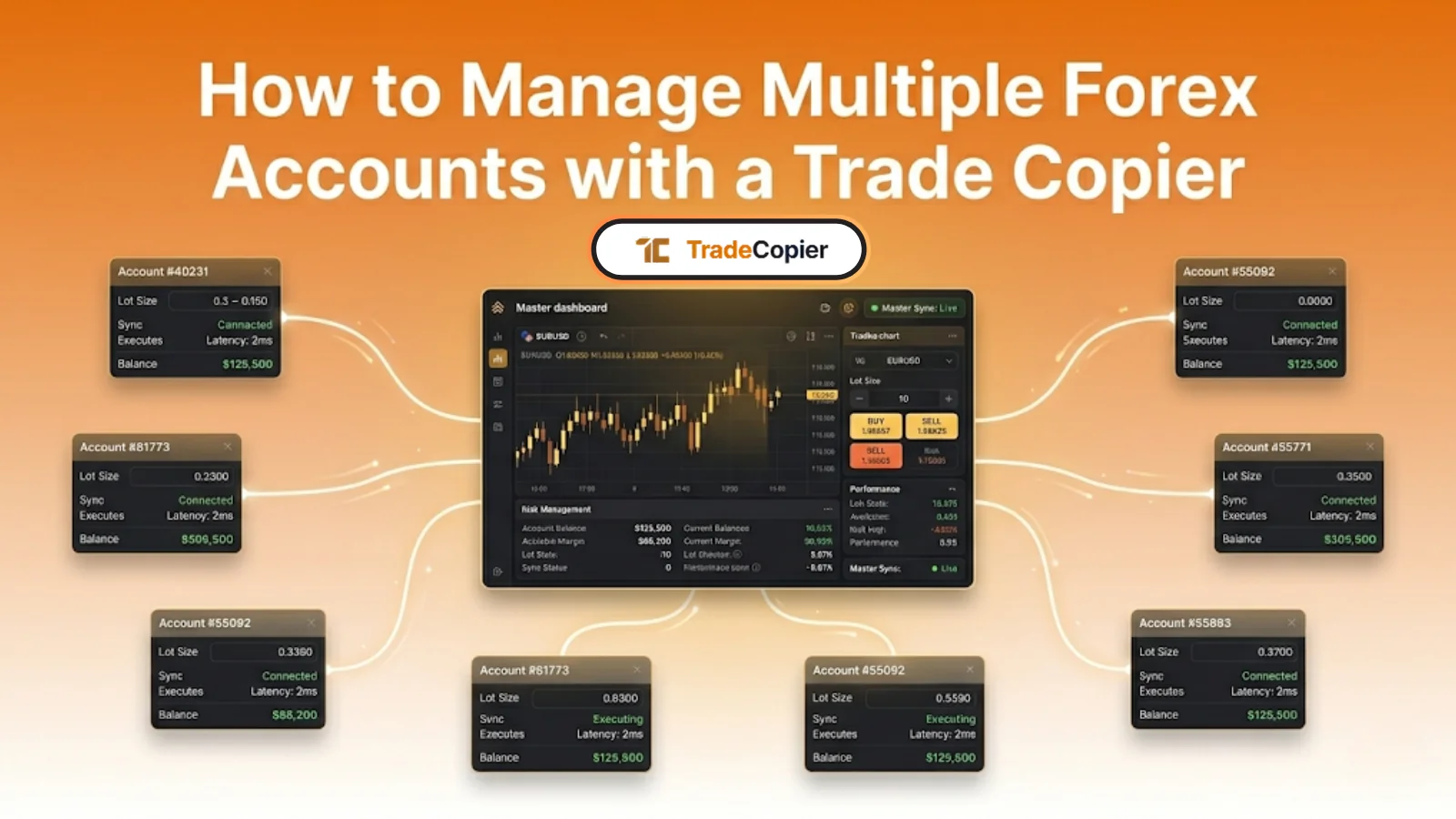
How to Manage Multiple Forex Accounts with a Trade Copier
Introduction
Intermediate traders often seek ways to scale their operations efficiently without compromising on strategy execution. Managing multiple forex accounts manually can lead to errors, missed opportunities, and overwhelming administrative burdens, especially as portfolios grow. This is where a trade copier becomes invaluable, allowing traders to replicate trades across several accounts seamlessly and in real time.
The importance of this tool cannot be overstated for those handling diverse client funds or personal sub-accounts. It streamlines operations, ensures consistency in trade execution, and frees up time for market analysis rather than repetitive tasks. For intermediate traders, who already possess a solid grasp of forex fundamentals, adopting a trade copier represents a logical step toward professional-grade management.
This article explores how to manage multiple forex accounts with a trade copier, delving into its mechanics, setup processes, and comparisons with alternatives like MAM and PAMM systems. Readers will gain insights into selecting the right software, implementing best practices, and optimizing performance. By the end, traders will understand how this technology can enhance efficiency and profitability in multi-account environments.
Whether overseeing personal investments or client portfolios, mastering trade copiers empowers traders to operate at scale. The following sections provide practical guidance tailored for intermediate users, drawing on real-world applications to illustrate key concepts.
Understanding Trade Copiers for Managing Multiple Forex Accounts
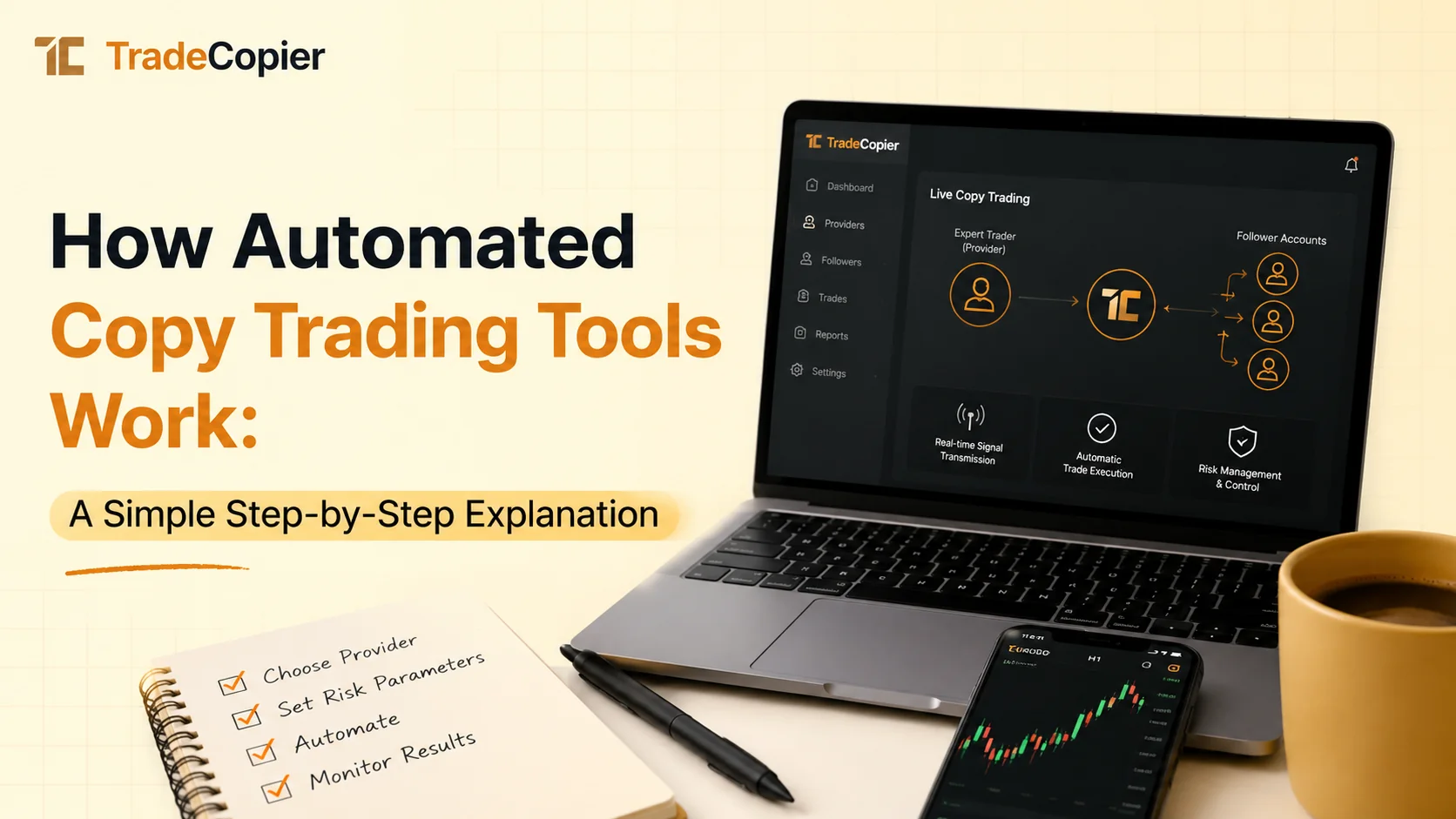
A trade copier is specialized software designed to automatically duplicate trades from a master account to one or more slave accounts, enabling efficient management of multiple forex accounts. This tool operates across platforms like MT4 and MT5, ensuring that buy/sell orders, stop losses, and take profits are mirrored precisely without manual intervention. For intermediate traders, this means maintaining strategy integrity across accounts while scaling exposure to market movements.
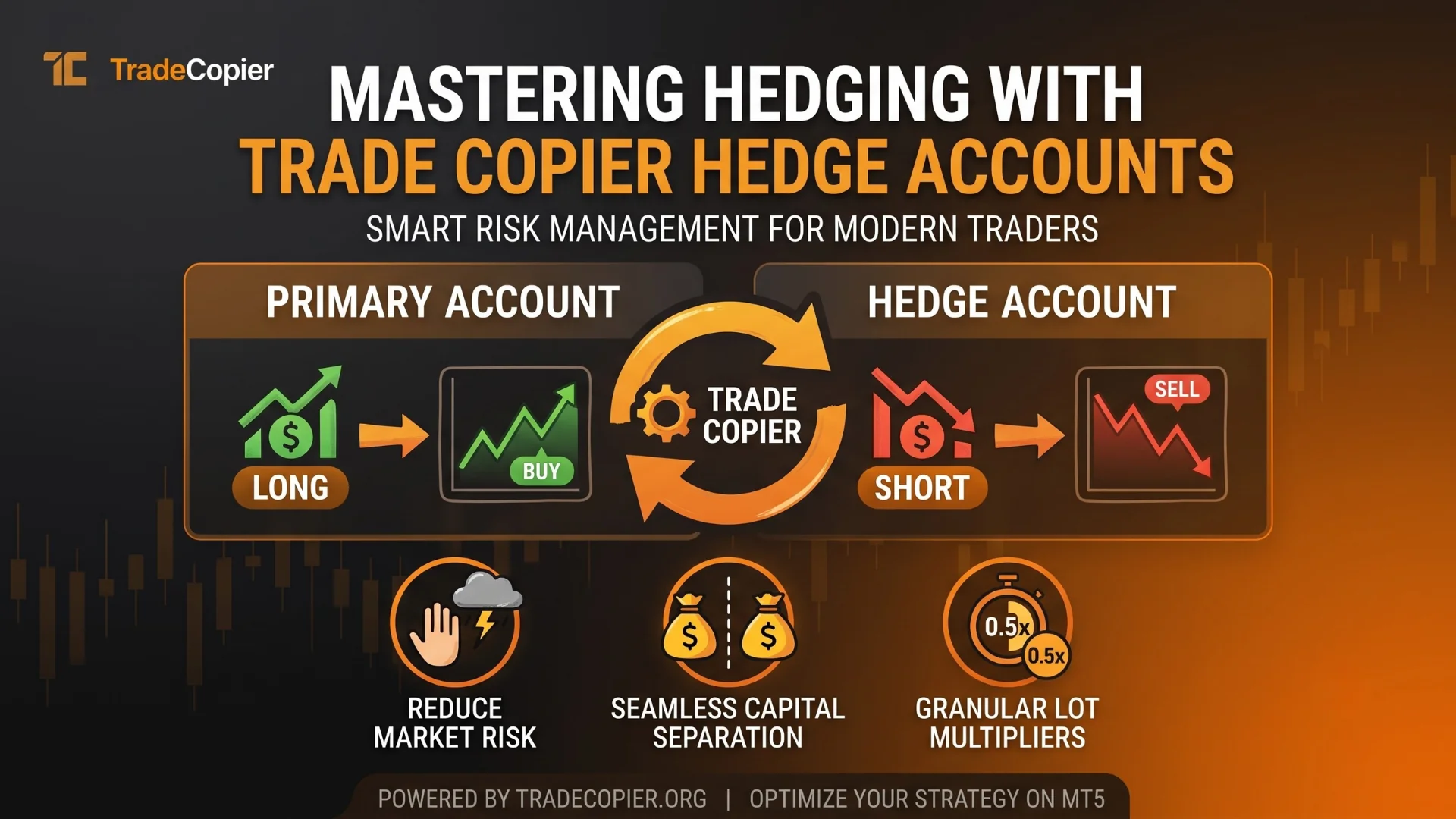
Key benefits include risk equalization, where lot sizes can be adjusted proportionally based on account balances, preventing overexposure in smaller accounts. For instance, a trader with a $10,000 master account might copy trades to a $5,000 slave account at half the lot size, preserving the risk-reward ratio. This feature is particularly useful in volatile forex markets, where timely execution can make or break profitability.
Trade copiers also support multi-account MT4 trade copier setups, allowing integration with various brokers. According to industry reports, over 60% of professional forex managers use such tools to handle diversified portfolios, reducing operational errors by up to 80%. Intermediate traders can leverage this to test strategies across simulated and live accounts simultaneously, gathering data for refined decision-making.
However, selecting a reliable trade copier requires attention to latency issues and compatibility. Low-latency copiers minimize slippage, ensuring trades execute within milliseconds. Real-world applications show that traders using high-fidelity copiers report consistent performance across global sessions, from London to Tokyo.
- Customization options: Adjust multipliers for equity-based copying to suit account sizes.
- Monitoring features: Real-time dashboards track all copied trades, flagging discrepancies.
- Security protocols: Encrypted data transmission protects sensitive account information.
By understanding these elements, traders can effectively manage multiple forex accounts, turning complexity into streamlined efficiency.
Setting Up a Multi-Account Trade Copier System
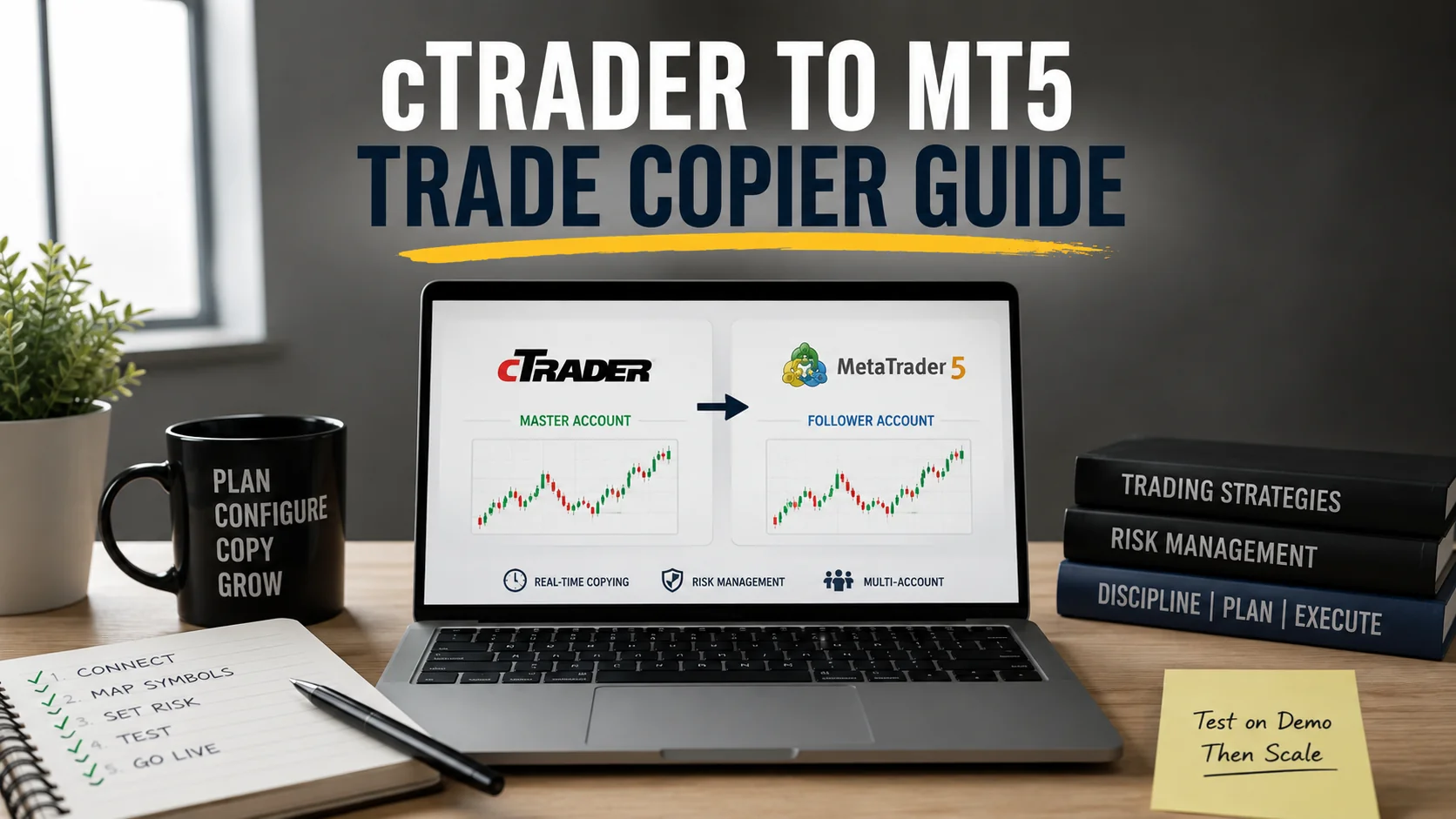
Implementing a trade copier begins with choosing forex account manager software that aligns with trading platforms and broker requirements. For MT4 users, a multi-account MT4 trade copier facilitates seamless integration, while MT5 variants handle advanced features like hedging. The setup process involves installing the software on a VPS for uninterrupted operation, ensuring 24/7 availability during market hours.
Step one: Configure the master account by linking it to the copier via API or plugin. Traders then add slave accounts, specifying parameters like lot multipliers and maximum spread filters to avoid poor executions. For example, an intermediate trader managing three accounts—one personal and two client-based—can set the copier to replicate a EUR/USD scalp strategy, adjusting volumes to match each account's risk tolerance.
Once operational, monitoring is crucial; most software provides logs detailing copy success rates and delays. In practice, this setup has helped traders scale from two to ten accounts without proportional time increases, as evidenced by case studies from forex communities where efficiency gains reached 50%. Copy trades to multiple accounts MT5 becomes straightforward with visual interfaces that map account hierarchies.
Practical advice includes starting with demo accounts to test configurations, avoiding common pitfalls like unequal slippage across brokers. Regular updates to the software ensure compatibility with evolving platform versions. Intermediate traders benefit from automation rules, such as pausing copies during high-impact news events to mitigate risks.
- Install and license the copier software on a stable server.
- Input account credentials securely, enabling two-factor authentication where possible.
- Test with small trades, verifying execution speeds and accuracy.
- Scale up gradually, reviewing performance metrics weekly.
This methodical approach transforms multi-account management into a reliable system, empowering traders to focus on strategy over logistics.
Comparing Trade Copiers to MAM and PAMM Systems
When managing multiple forex accounts, traders often weigh trade copiers against MAM (Multi-Account Manager) and PAMM (Percentage Allocation Management Module) systems. MAM allows a manager to allocate trades proportionally across client accounts in real time, ideal for fund managers handling segregated funds. PAMM, conversely, pools client capital into a single master account for unified trading, distributing profits based on allocations.
Trade copiers offer greater flexibility for independent intermediate traders, as they enable copying from personal master accounts without broker-specific infrastructure. Unlike MAM, which requires broker support and may incur higher fees, a trade copier like those integrated with MT4 or MT5 operates independently. For instance, a trader using a copier can replicate signals from multiple sources, whereas MAM/PAMM is typically tied to one manager's strategy.
Statistics from forex regulatory bodies indicate that trade copiers reduce setup costs by 40% compared to MAM implementations, appealing to self-directed traders. However, MAM excels in compliance for institutional setups, providing audited trails. In MAM PAMM vs trade copier debates, copiers win for simplicity in personal multi-account scenarios, avoiding the pooling risks of PAMM where client losses can cascade.
Real-world insights reveal that hybrid approaches—using copiers for personal accounts and MAM for clients—optimize control. Traders should assess based on scale: copiers suit 2-20 accounts, while MAM/PAMM fits larger funds. Key considerations include transparency; copiers allow full visibility into each account's performance.
- Cost efficiency: Copiers often have one-time fees versus ongoing MAM commissions.
- Customization: Direct control over copy parameters in copiers versus standardized allocations in MAM.
- Risk management: Copiers enable per-account stops, unlike pooled PAMM exposures.
Ultimately, for intermediate traders seeking autonomy, trade copiers provide a versatile alternative to traditional multi-account management frameworks.
For more on reliable solutions, explore the TradeCopier by FXTrusts, which offers robust features for seamless integration.
Conclusion
Managing multiple forex accounts with a trade copier enhances efficiency, ensures consistent strategy execution, and scales operations without added complexity. By understanding setup processes and comparing options like MAM and PAMM, intermediate traders can select tools that align with their goals, minimizing risks and maximizing returns. This approach empowers professionals to focus on market insights rather than administrative tasks.
Start your copy trading journey at tradecopier.org to discover tailored solutions for multi-account management.