Implement Trade Copier Trailing Stops for MT4 & MT5 Apps
Introduction
Protecting profits while allowing trades to continue running is a fundamental challenge in active trading. Traditional fixed stop losses provide downside protection, but they do not automatically adapt as market prices move in a favorable direction. This is where trailing stops become valuable, particularly in copy trading environments where multiple accounts require synchronized trade management.
This article explains how a trade copier trailing stop system works, why trailing stop synchronization matters in MT4 and MT5 environments, and how traders can improve risk management through automated stop-loss adjustments. It also explores implementation considerations for multi-account copy trading operations.
1. Understanding Trailing Stops in Copy Trading
1.1. What Is a Trade Copier Trailing Stop?
A trailing stop is a dynamic stop-loss mechanism that automatically moves with price as a trade becomes profitable.
Unlike a fixed stop loss, a trailing stop adjusts continuously when market conditions move favorably.
Example:
- Trade entry: EURUSD at 1.1000
- Initial stop loss: 1.0950
- Price rises to 1.1100
- Trailing stop moves higher automatically
If the market reverses, the adjusted stop loss helps secure a portion of accumulated profits.
In copy trading environments, a trade copier trailing stop ensures that stop-loss modifications occurring on the source account are replicated accurately across connected destination accounts.
Without synchronized trailing stop management:
- Risk profiles may diverge
- Profit protection may become inconsistent
- Account performance may vary significantly
1.2. Why Trailing Stops Matter in Multi-Account Trading
Managing trailing stops manually across multiple accounts can be operationally difficult.
As account numbers increase, traders face challenges such as:
- Delayed stop-loss updates
- Execution inconsistencies
- Uneven profit protection
- Portfolio synchronization issues
A properly configured copy trailing stop loss system helps maintain consistency by ensuring stop adjustments are distributed automatically.
This becomes particularly useful for:
- Signal providers
- Fund managers
- Multi-account traders
- Prop trading operations
- Portfolio managers
Key Detail: Common Trailing Stop Parameters
- Initial stop-loss distance
- Trailing activation level
- Step size increment
- Minimum profit threshold
- Symbol-specific settings
Key Detail: Operational Logic Constraints
- Excessively tight trailing stops may trigger prematurely
- Volatile markets may increase stop-out frequency
- Slippage can affect stop synchronization
- Broker execution conditions vary
- Risk settings should remain account-specific
Proper configuration balances profit protection with trade longevity.
2. Technical Implementation of Trailing Stop Synchronization
2.1. Trailing Stop Replication Workflow
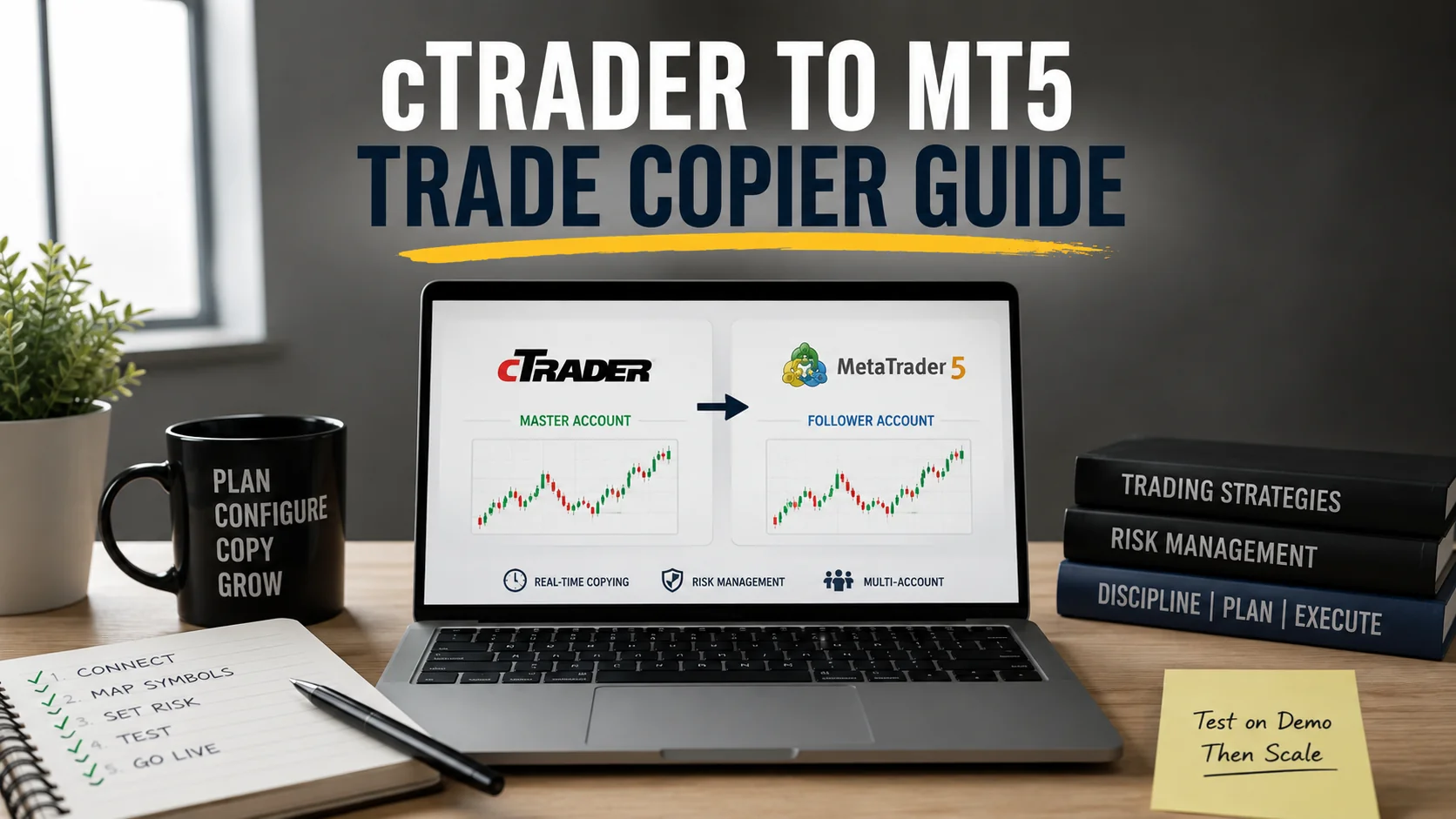
A trailing stop trade copier MT4 or MT5 environment operates by monitoring trade modifications on the source account and distributing those changes to connected accounts.
Typical workflow:
- Trade opens on master account
- Initial stop loss is assigned
- Market moves favorably
- Trailing stop adjusts automatically
- Modification is detected by copier
- Updated stop loss is replicated to destination accounts
This process helps maintain alignment between:
- Source account risk exposure
- Destination account protection levels
- Portfolio-wide trade management
TradeCopier.org supports structured trade replication environments designed to synchronize trade activity and risk controls across multiple connected accounts.
Pro Tip: Trailing stop settings should be tested against the strategy's average volatility profile. Overly aggressive settings often reduce trade longevity.
2.2. MT4 and MT5 Trailing Stop Management
Both MT4 and MT5 traders frequently use trailing stops as part of broader risk management frameworks.
Common applications include:
- Trend-following strategies
- Swing trading systems
- Breakout trading models
- Automated trading systems
- Long-duration position management
A properly configured MT5 trailing stop copier helps maintain consistent stop-loss behavior regardless of account scale.
Benefits include:
- Improved profit protection
- Reduced manual intervention
- Faster risk adjustments
- Consistent execution workflows
As account structures become more complex, centralized trailing stop management becomes increasingly important.
3. Testing and Optimization
3.1. Evaluating Trailing Stop Performance
Trailing stop systems should be tested before deployment in live trading environments.
Testing helps determine:
- Stop-loss efficiency
- Profit retention rates
- Drawdown reduction potential
- Trade duration behavior
- Volatility sensitivity
Recommended test scenarios include:
- Trending markets
- Range-bound markets
- High-volatility sessions
- News-driven conditions
The objective is finding a balance between protecting profits and allowing trades enough room to develop.
Common Optimization Variables
- Trailing distance
- Activation threshold
- Step increments
- Volatility-based adjustments
- Asset-specific configurations
Different strategies often require different trailing stop settings.
Important: A trailing stop that performs well on one asset may produce poor results on another. Testing should be conducted for each market environment.
3.2. Avoiding Common Trailing Stop Mistakes
Many traders implement trailing stops without considering market structure.
Common mistakes include:
- Using fixed values across all instruments
- Ignoring volatility conditions
- Activating trailing stops too early
- Setting stop distances too tightly
- Failing to test synchronization behavior
These issues may lead to:
- Premature trade exits
- Reduced profitability
- Increased execution inconsistency
- Higher portfolio turnover
TradeCopier.org helps traders maintain more structured trade management workflows through scalable copy trading infrastructure and synchronized execution controls.
4. Visual Analysis / Results
4.1. Typical Trailing Stop Behavior
In a properly configured environment, trailing stops gradually move in the direction of profitable trades.
Example progression:
| Trade Stage | Stop Loss Position |
|---|---|
| Trade Entry | Initial stop loss |
| Moderate Profit | Stop moves toward breakeven |
| Strong Trend | Stop locks in profits |
| Market Reversal | Trade exits automatically |
This approach helps balance:
- Risk reduction
- Profit preservation
- Trade flexibility
Visual chart analysis often demonstrates smoother risk management when trailing stops are integrated effectively.
4.2. Performance Comparison Scenarios
Fixed Stop-Loss Environment
- Static protection
- No profit locking
- Minimal management flexibility
Basic Trailing Stop Environment
- Automatic stop movement
- Improved profit retention
- Reduced manual intervention
Synchronized Multi-Account Trailing Stops
- Consistent portfolio protection
- Centralized risk management
- Improved execution alignment
- Better operational efficiency
For multi-account trading operations, synchronized trailing stop management often contributes to more consistent trade handling.
Conclusion
A properly configured trade copier trailing stop system helps traders improve risk management by synchronizing dynamic stop-loss adjustments across connected accounts.
By supporting:
- automated stop-loss updates,
- profit protection,
- reduced manual intervention,
- and consistent multi-account execution,
trailing stop synchronization becomes a valuable component of modern copy trading infrastructure.
As trading operations scale, maintaining consistent risk controls across multiple accounts becomes increasingly important for long-term operational stability.
TradeCopier.org provides flexible copy trading infrastructure designed to help traders and brokers manage synchronized trade execution and structured risk management across MT4 and MT5 environments.
Start your copy trading journey at tradecopier.org
Quick answers
Frequently Asked Questions
Find answers to the most common questions about this topic.
What is a trade copier trailing stop?
A trade copier trailing stop synchronizes trailing stop-loss modifications from a source account to connected destination accounts.
How does a copy trailing stop loss work?
When a trailing stop adjusts on the master account, the copier automatically updates stop-loss levels on copied accounts.
Why are trailing stops useful in copy trading?
They help protect profits, reduce manual trade management, and maintain consistent risk controls across multiple accounts.
Can trailing stops be used in both MT4 and MT5?
Yes. Trailing stop functionality is commonly used in both MT4 and MT5 trading environments.
What is the biggest risk of using trailing stops?
Overly tight settings can cause trades to close prematurely during normal market fluctuations.
How does TradeCopier.org support trailing stop synchronization?
Tradecopier.org provides structured trade replication and risk management capabilities designed to help synchronize trade activity and stop-loss adjustments across multiple accounts.