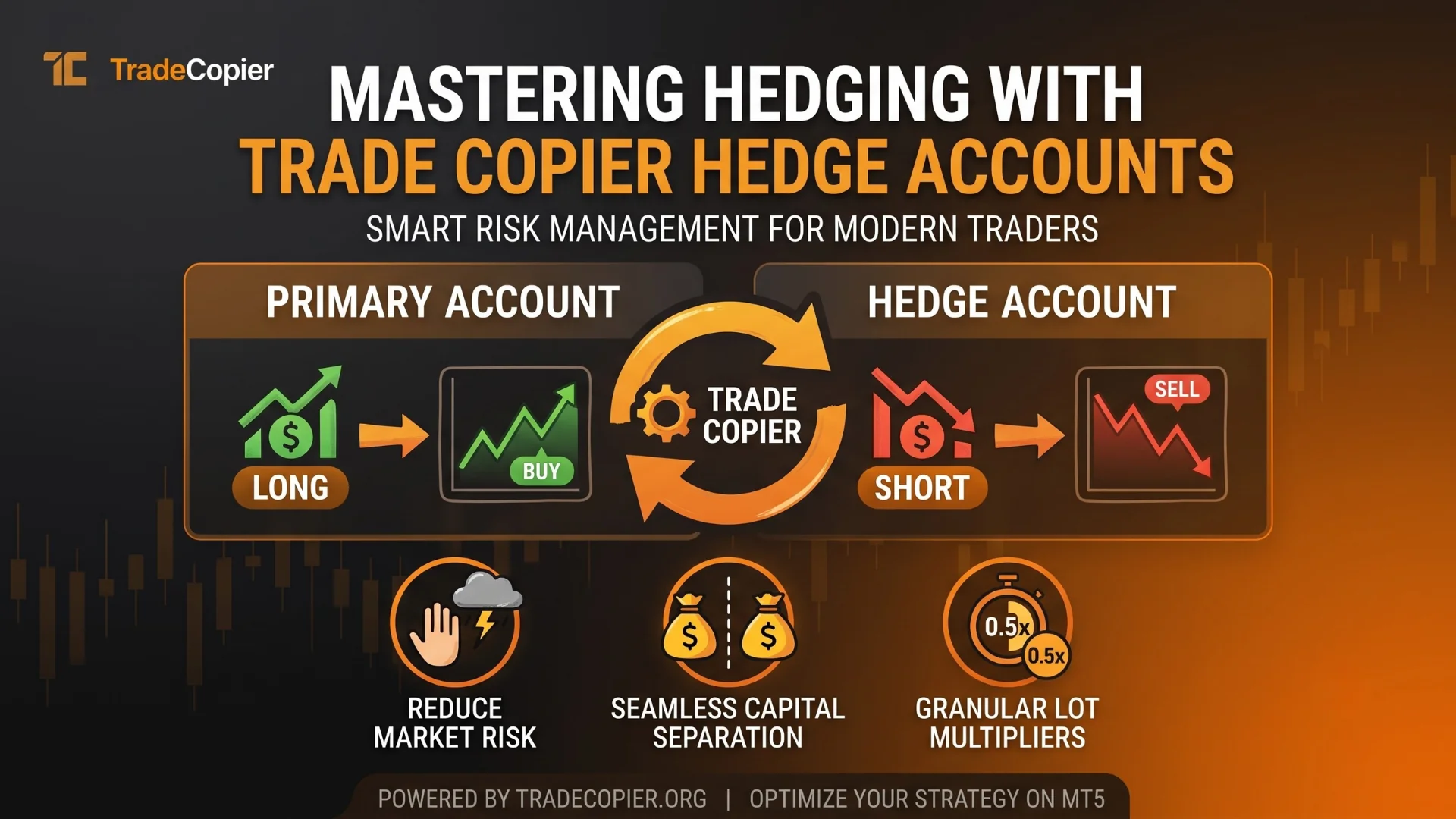
How a Trade Copier Works on MT4 and MT5:
Events and Account State
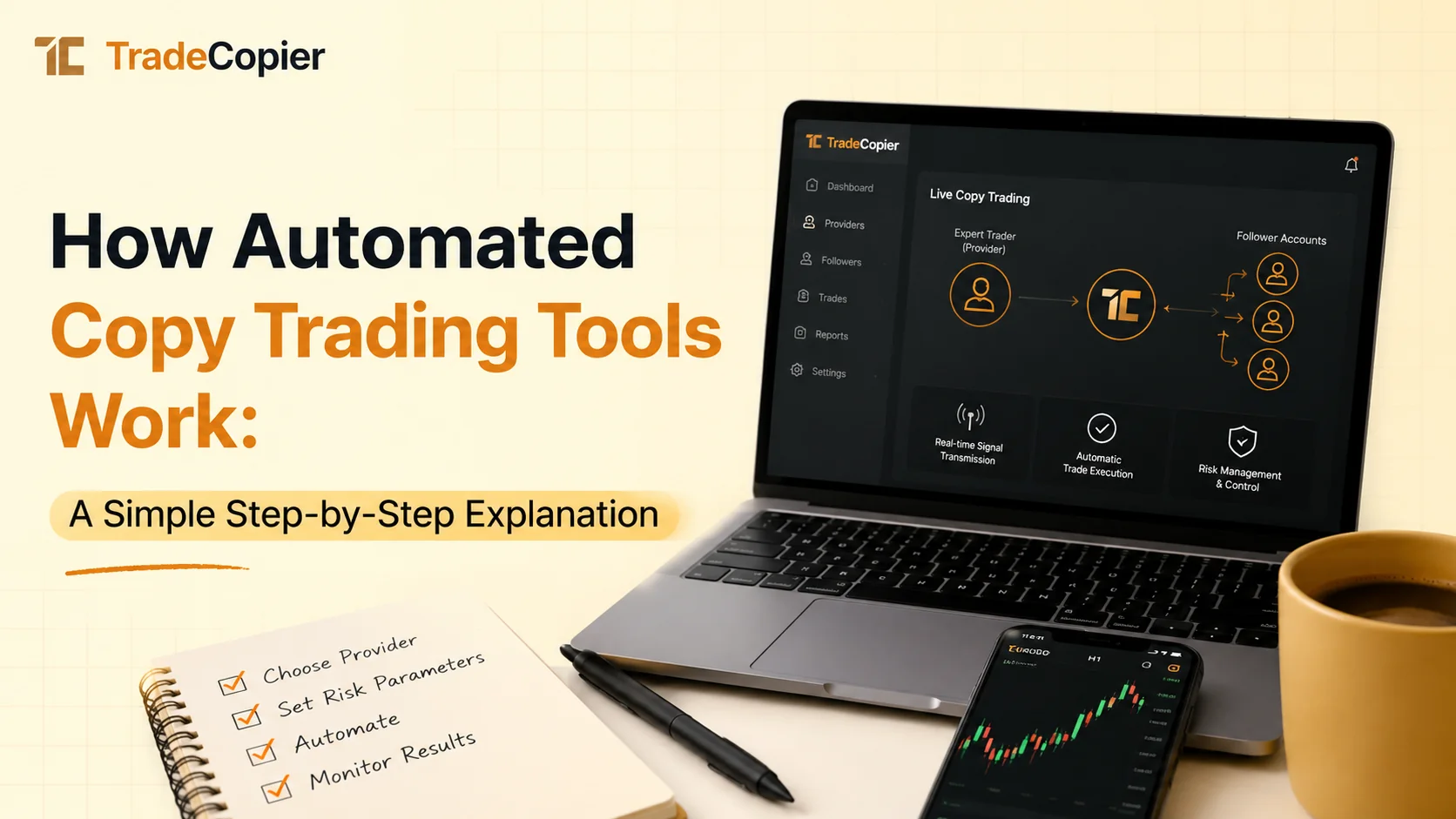
An MT4 or MT5 trade copier observes a supported source event, applies route rules, submits an eligible destination request and records the broker outcome. Each stage answers a different question. Seeing a source event or a copied-event notification alone does not prove that a destination position matches it.
Publisher disclosure: TradeCopier publishes this explanation about its own live cloud service. It supports MT4, MT5, cTrader, NinjaTrader 8, DXTrade, TradeLocker, MatchTrader and VertexFX. This generic diagnostic model is not a verified internal architecture diagram, a connector specification or a measured latency result. Confirm the broker pair, direction, account mode and supported actions.
From source instruction to destination evidence
| Stage | Expected information | Evidence boundary |
|---|---|---|
| Observe | Source account alias, ticket/event ID, symbol, side, quantity and intended action | The event must be observed by the actual configured connector |
| Translate | Eligibility, symbol mapping, sizing rule and destination quantity | A similar symbol name or lot number is not enough |
| Request | Destination request ID, action, timestamp and broker response | Acknowledgement is not a completed fill |
| Reconcile | Orders, fills/deals, working remainder, positions and protection values | The account result can differ from the intended request |
MetaQuotes' MT5 trading principles distinguish orders, deals and positions. In netting mode, deals contribute to one position per symbol; hedging can retain separate positions. A copier needs to associate a source action with the intended destination state rather than assuming that a source ticket is a universal destination identifier.
A fictional partial-close example
Assume equivalent contracts, a confirmed 1:1 quantity policy, full fills and no unrelated exposure. A source buy of 0.20 lot and its intended follower buy are both open. The source then closes 0.05 lot. The planned follower result is 0.15 lot long, after the intended closing execution, rather than a new independent 0.05-lot short position.
MQL4's OrderClose reference identifies the source ticket and quantity to close. Record which destination position or exposure that action should affect. On a netting account, unrelated trades in the same symbol can share the position, so the simple example does not establish how every multi-source route handles closing.
All quantities above are fictional; no TradeCopier execution was recorded. A route may reject an unsupported action or quantity. Compare the expected state to actual broker deals and positions before calling the row matched.
What cloud routing changes, and what to confirm
TradeCopier hosts its routing layer, so users do not need to rent a personal VPS for that layer. The full route can still have connector, terminal, network, broker or account-access requirements. Ask what must remain available for the exact MT4 or MT5 connection, how source events are detected and how loss of connection is reported.
No public evidence in this review establishes that every route uses WebSockets, that MT4 always operates without a terminal, or that a distributed node failure always triggers seamless failover. Treat these as implementation questions. Transport choice alone cannot establish latency, uptime, broker execution or profitability.
Check execution and recovery separately
The MQL5 OrderSend documentation explains that a successful return is not proof that a requested market operation executed. Its trade-transaction reference also describes multiple transaction events from trading operations. Keep request, broker response, fill and position identifiers separate.
During a timeout, mark the result unresolved until broker evidence is available. Reconcile orders, deals and positions before retrying. A new connection does not prove that a missed instruction will replay, that a prior request failed or that existing positions closed.
Start with the current product policy
TradeCopier is live and offers a permanent Free plan with one group and three total connected accounts, not a mandatory-upgrade seven-day trial. Create an account, obtain current connector instructions and use the smallest permitted demo pair to check opening, modification and closing actions.
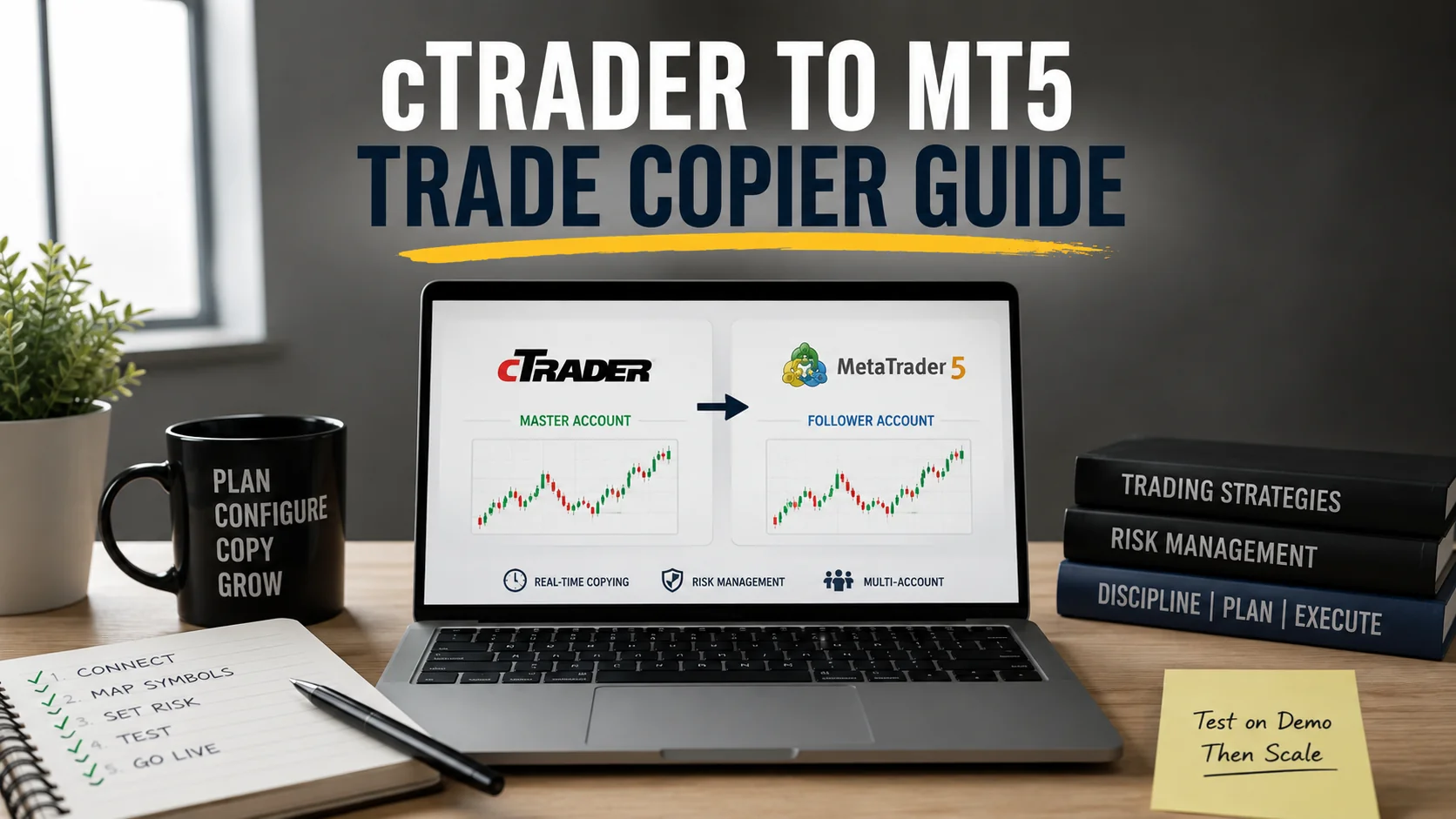
For one specific direction, use the MT4-source to MT5-follower guide; do not transfer its examples automatically to the reverse route. For deeper MT5 connection requirements, use the MT5 connection-check guide. Keep an unrun or unsupported action explicit instead of presenting it as established product behavior.
Quick answers
Frequently Asked Questions
Find answers to the most common questions about this topic.
What does an MT4 or MT5 trade copier do?
It observes supported source instructions, applies route-specific mapping and sizing, submits eligible destination requests and records their outcomes. Verify broker orders, fills and positions rather than assuming all accounts are synchronized.
Does a successful destination request prove a trade filled?
No. MetaQuotes distinguishes request acceptance from execution. Check destination orders, every associated deal or fill, remaining working quantity and resulting position.
Does TradeCopier require a seven-day trial upgrade?
No. The current policy is a permanent Free plan with one trading group and three total connected accounts. Paid monthly and annual plans add capacity and features; check current pricing.
Does cloud copying mean my MT4 terminal can always be switched off?
Hosted routing does not establish every connector runtime requirement. TradeCopier supports MT4; obtain current setup instructions for the exact broker route and confirm what terminal or connector must remain available.
Do all trade copier connections use WebSockets or automatic failover?
This review did not verify a universal transport or failover implementation. Ask for the current connection and recovery behavior for your route. A transport name does not establish measured execution speed or uptime.